Lessons learned from Bifröst University: AI, inclusion and support in online higher education
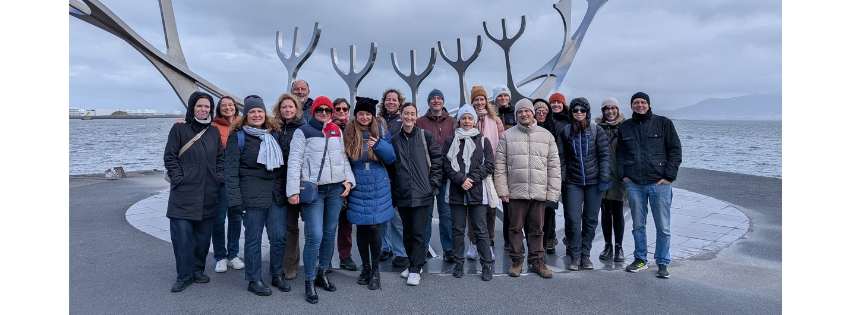
Marcelo Maina participated in Bifröst University’s International Week 2026, an Erasmus+ exchange focused on learning about experiences in artificial intelligence, student support, academic integrity, lifelong learning, and inclusion in higher education. The exchange made it possible to identify transferable practices and opened new avenues for reflection on responsible digital transformation.
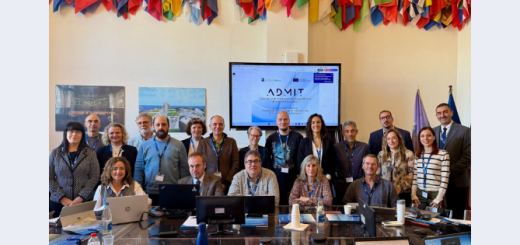
Dr. Marcelo Maina, professor of Psychology and Education Sciences and researcher of Edul@b group – Futures of Education in the Digital Age Research Centre (UOC-FuturEd), participated in International Week 2026 at Bifröst University in Iceland during the week of May 11th, as part of the Erasmus+ Staff Mobility program. Faculty members from the Information and Communication Sciences Department and the UOC’s eLinc also participated in this event. Academic and administrative staff from universities in Portugal, Greece, the Netherlands, Latvia, Bulgaria, and Germany also attended. The week contributes to strengthening the OpenEU project, the first pan-European alliance of universities dedicated to open, digital, and distance higher education.
The activity aimed to learn firsthand how Bifröst University addresses some of the current challenges in higher education: the responsible use of data and artificial intelligence, dropout prevention, the integrity of assessment in digital environments, the inclusion of underrepresented groups, and the design of flexible pathways for adults.
Participation in this international week allowed for a comparison of institutional and teaching experiences with Bifröst teams, as well as the identification of experiences of interest regarding digital education, pedagogical innovation, inclusion, and lifelong learning.
1. Data and personal support to prevent abandonment
One of the week’s highlights was the presentation of Bifröst University’s model for identifying students who may need support during the first weeks of the semester. The university combines the use of data from Canvas with personalized interventions from the educational guidance team.
The procedure is clear: after the first week, students with no activity in the virtual environment are identified and an initial contact is made via email. After the second week, if no assignments have been submitted, follow-up is reinforced via email or phone call. This practice allows for the timely detection of disengagement, planning difficulties, technical problems, or academic support needs.
The model’s value lies not only in data analytics, but also in how that data translates into concrete educational action. The information is not used to automate decisions, but to foster a supportive relationship. This combination of digital indicators and human interaction is particularly significant for online universities, where early detection and monitoring of student progress are key to promoting retention.
2. AI, assessment, and academic integrity
Another session focused on the use of exam proctoring tools supported by artificial intelligence. Bifröst presented its experience with a proctoring system that allows for remote exams in a secure environment, with identity verification, workspace review, and video, audio, and screen recording.
The case is interesting because it demonstrates a gradual and carefully managed implementation: first with a pilot group, then with a partial application, and finally with its extension to written exams. It also highlights a key ethical and pedagogical point of view: AI-generated alerts do not replace human review. Any potential irregularities must be subsequently evaluated by the responsible team.
This case provides further insights into assessment in the age of generative AI. The question is not only which technologies to use, but also under what institutional conditions, with what safeguards, with what communication to students, and with what balance between trust, security, transparency, and learning experience.
3. Flexible learning paths, adults and lifelong learning
International Week also provided an opportunity to learn about the University Gateway program and Bifröst University’s lifelong learning initiatives. University Gateway serves as an access route for adults who need preparatory work before beginning university studies. The program combines modular distance learning, the use of Canvas, synchronous sessions, a flipped classroom approach, and occasional in-person meetings.
This model shows that inclusion in higher education depends not only on opening access, but also on creating conditions to support students’ educational pathways. In this sense, flexible design, initial guidance, recognition of prior learning, and the possibility of progressing through adapted learning pathways are key elements.
The offering of micro-credentials and continuing education programs reinforces this same logic. Bifröst offers short, accredited courses that are compatible with working life and can contribute to both professional development and progression toward further studies. This approach connects directly with current debates on lifelong learning, employability, recognition, and new forms of participation in university life.
4. Situated internationalization and institutional learning
In addition to the sessions focused on digital education, the week included activities aimed at understanding the Icelandic context and the role of Bifröst University in a territory with particular characteristics: geographical dispersion, presence of adult students, need for flexibility and a strong tradition of distance education.
The conference on Iceland and European integration provided a broader context for the university experience. Higher education institutions do not develop their educational models in isolation from their social, political, and territorial context. In the case of Bifröst, the commitment to distance learning, personalized support, and continuing education responds to specific needs related to access, participation, and social development.
This perspective is valuable because it reminds us that internationalization consists of mobility and cooperation that includes observing how other universities respond to their specific conditions, what solutions they develop, and what questions they raise for our own practices.
5. Transfers for the UOC and lines of work for Edul@b
The exchange facilitated the identification of commonalities among the institutions and fostered deeper reflection on these issues, allowing for a more comprehensive and nuanced approach based on a variety of shared experiences. Among these was the importance of strengthening early warning models that combine data, pedagogical criteria, and human support. Also highlighted was the need to continue discussing how to guarantee academic integrity in digital environments without reducing assessment to a purely technological problem. Furthermore, participants were able to explore issues related to designing flexible learning pathways for adult students, the role of micro-credentials, the recognition of prior learning, and the development of continuing education models connected to professional and social needs.
This experience reinforces established lines of research at the university, and particularly within the Edul@b research group, focusing on the digital transformation of educational institutions, learning design, artificial intelligence, inclusion, and quality in higher education. At the same time, it opens up opportunities for international collaboration on responsible AI practices, student support, and more inclusive digital learning models.
The stay at Bifröst University demonstrates that digital innovation only becomes meaningful when linked to a clear institutional responsibility: to provide better support, expand opportunities, sustain educational pathways, and design more equitable learning experiences. At a time marked by the expansion of AI in higher education, this type of international exchange allows us to move beyond the allure of technology to explore deeper questions about pedagogy, care, quality, and inclusion.