Edul@b at ECER 2026: quality, learning design, and artificial intelligence
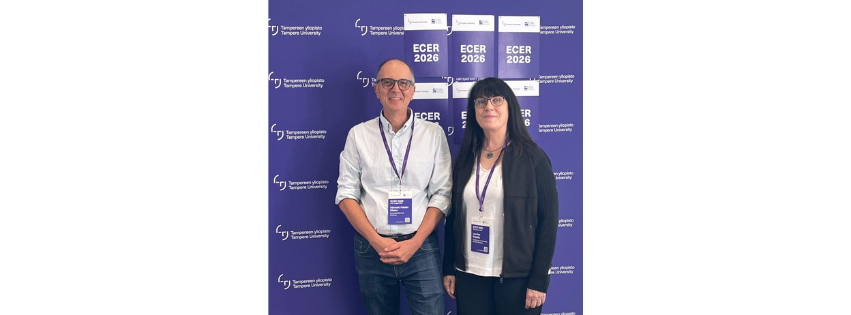
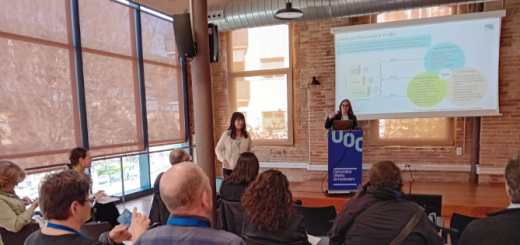
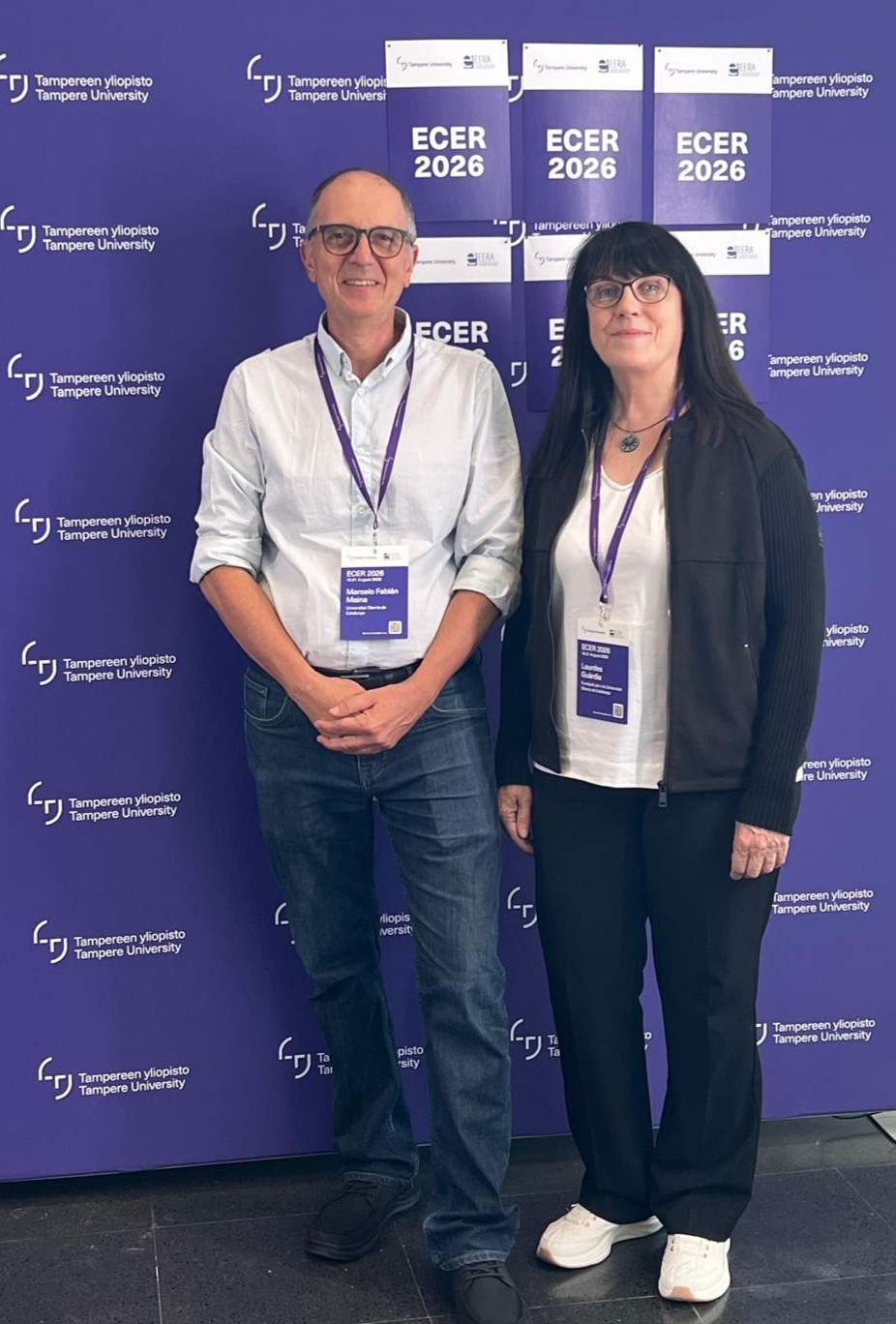
Edul@b researchers Lourdes Guàrdia and Marcelo Maina participated as speakers at the European Conference on Educational Research (ECER 2026), held in Tampere, Finland, from August 17 to 21. Their contributions addressed two challenges closely linked to the transformation of higher education: how to turn course quality into a tool for improving teaching, and how to integrate generative artificial intelligence into learning design based on pedagogical, ethical, and inclusive criteria.
Both initiatives are part of European projects in which the authors participate and demonstrate a shared approach: moving beyond the mere incorporation of technologies toward the development of frameworks, tools, and processes that enable teachers to make better educational decisions.
ECER 2026: Research on quality, learning design, and AI
The two papers presented by the Edul@b team were developed within the framework of international projects addressing digital transformation from complementary perspectives.
The first, led by Marcelo Maina, was presented under the title Course Quality as a Lever for Digital Transformation: Developing an Education 5.0-aligned Scorecard for Reflective Practice and Informed Course Decisions. The second, led by Lourdes Guàrdia, was titled Developing the LLM-ed Framework for Learning Design: A Design-Based Research Study on Pedagogical Integration of Generative AI in Higher Education.
Rather than focusing on specific technologies, the two studies centered on the processes of design and teacher reflection: one focusing on course quality and the other on collaboration between faculty and artificial intelligence.
The “Course Quality Scorecard”: Making Quality a Tool for Digital Transformation
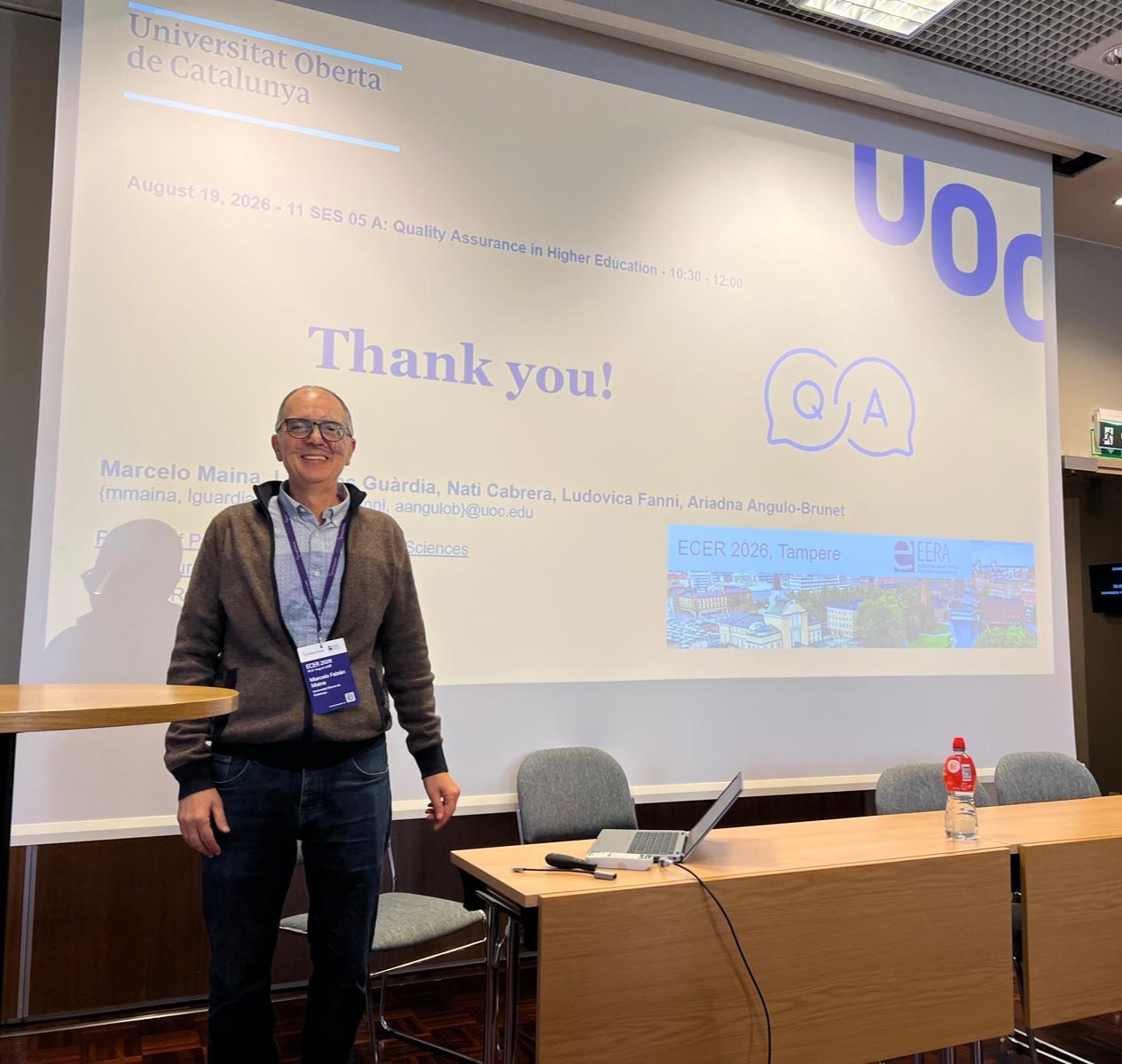
The paper presented by Marcelo Maina—along with Lourdes Guàrdia, Nati Cabrera, Ariadna Angulo-Brunet, and Ludovica Fanni—delved into the development and initial results of the Course Quality Scorecard (CQS). The research is part of DIGITAsia (Digital Transformation of Asian Higher Education), a European Erasmus+ Capacity Building project aimed at strengthening higher education capabilities.
Seven Asian and two European universities are participating in DIGITAsia to drive a digital transformation of education inspired by the principles of Education 5.0—a people-centered perspective that links the meaningful use of technology with inclusion, personalization, student engagement, and the connection of learning to social and professional needs.
In this context, the CQS serves as a self-assessment and peer-review tool that helps faculty analyze their courses, identify strengths and areas for improvement, and make informed decisions. The tool organizes quality into three broad areas—course design, alignment with the curriculum, and teaching practice—and employs a progressive scale to assess the level of development of various indicators.
Its development follows a Design-Based Research (DBR) methodology. The team began by analyzing international quality frameworks—such as TELAS, E-xcellence, OLC Quality Scorecards, and Quality Matters—comparing their criteria and indicators and relating them to the principles of Education 5.0. The initial version was reviewed by seven quality specialists and subsequently used in a training program for future trainers; a focus group evaluation of this program enabled further refinement of the instrument.
The results presented at ECER indicate a positive assessment of the CQS as a tool for reflecting on practice and making decisions during course design, while also identifying the need to simplify certain indicators and facilitate their adaptation to diverse institutional contexts. The next phase extends its application to instructors redesigning their own courses as part of the DIGITAsia project.
AI-LD Framework: Integrating Generative AI into Learning Design
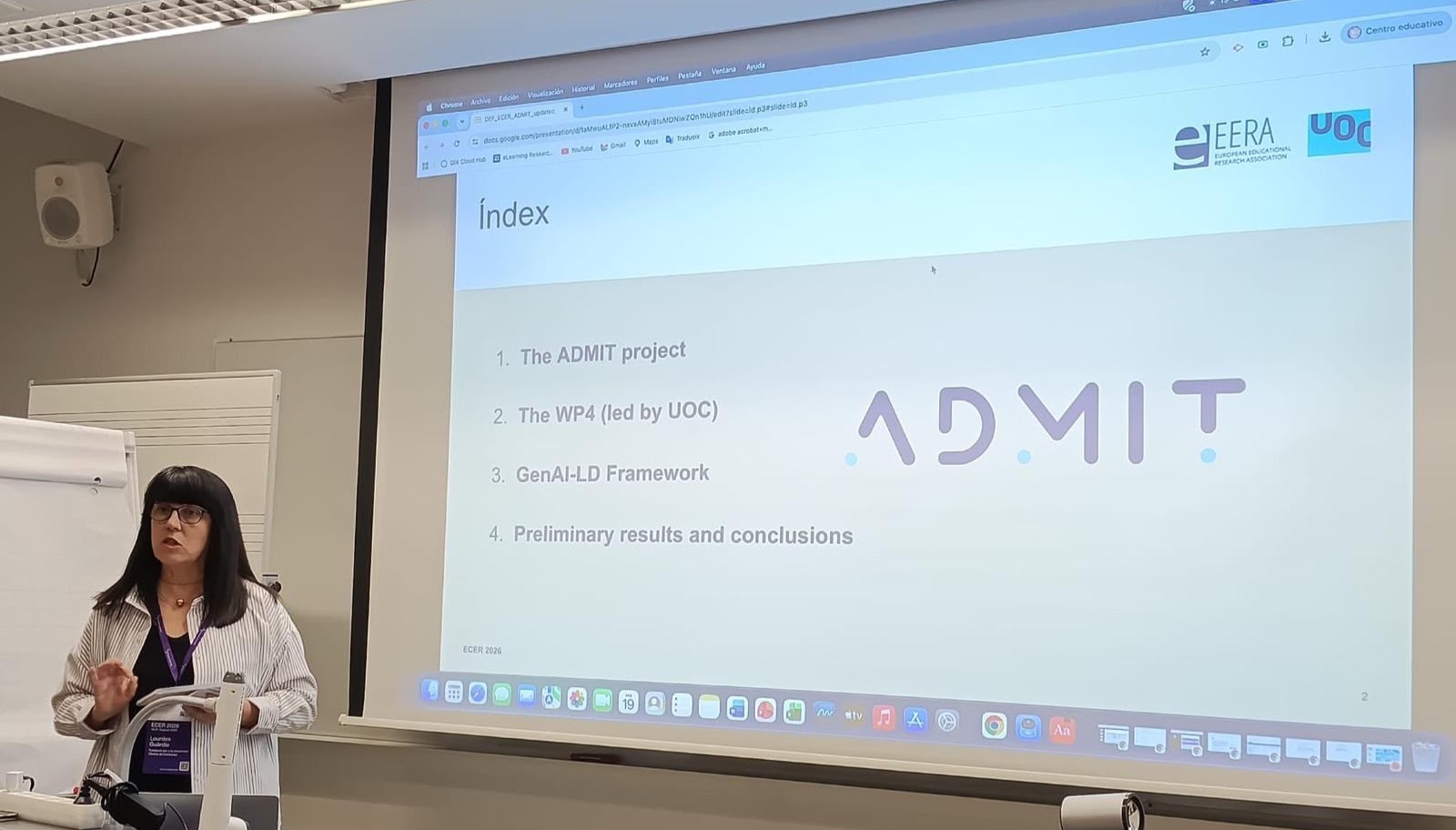
The second contribution, presented by Lourdes Guàrdia—along with Marcelo Maina, Nati Cabrera, and Ludovica Fanni—outlined the work carried out under the European project ADMIT, generative Ai anD large language Models In higher educaTion. ADMIT aims to establish educational and ethical conditions that enable the use of large language models and generative AI to enhance teaching and learning in higher education.
This work stems from an increasingly relevant issue: Generative Artificial Intelligence tools have rapidly entered the practices of teachers and students, yet their adoption has often occurred prior to the availability of sufficiently established pedagogical models indicating where, how, and for what purpose they should be incorporated into educational design.
The framework developed in ADMIT proposes precisely structuring that integration. It is organized around three phases—analysis and planning, activity design, and development and production—which articulate the complementary roles of the teaching staff and Generative AI. The teacher retains responsibility for pedagogical decisions, while the AI can function—depending on the phase—as a collaborative support, a creative co-designer, or a technical and content assistant.
The framework also cross-cuttingly incorporates issues of ethics, inclusion, accessibility, privacy, and responsibility, alongside principles of Universal Design for Learning (UDL). Its development follows a DBR methodology and has included successive validation processes involving academic staff, learning designers, researchers, and support professionals from various European institutions.
Preliminary results presented in Tampere show that these iterations have contributed to improving the framework’s clarity, usability, and pedagogical coherence. Among the principles emerging from the work, a fundamental idea stands out: Generative AI must be integrated into learning design processes—rather than being added later as an isolated tool—while preserving the agency and professional judgment of teachers.
The project is also developing a toolkit associated with the framework, featuring tools designed to verify ethical and regulatory requirements, organize collaboration between the teacher and Generative AI, and assess the quality of the generated results.
Beyond ECER: Strengthening Academic Collaboration in Finland
The stay in Finland continued with various academic meetings aimed at exchanging experiences and establishing new international connections.
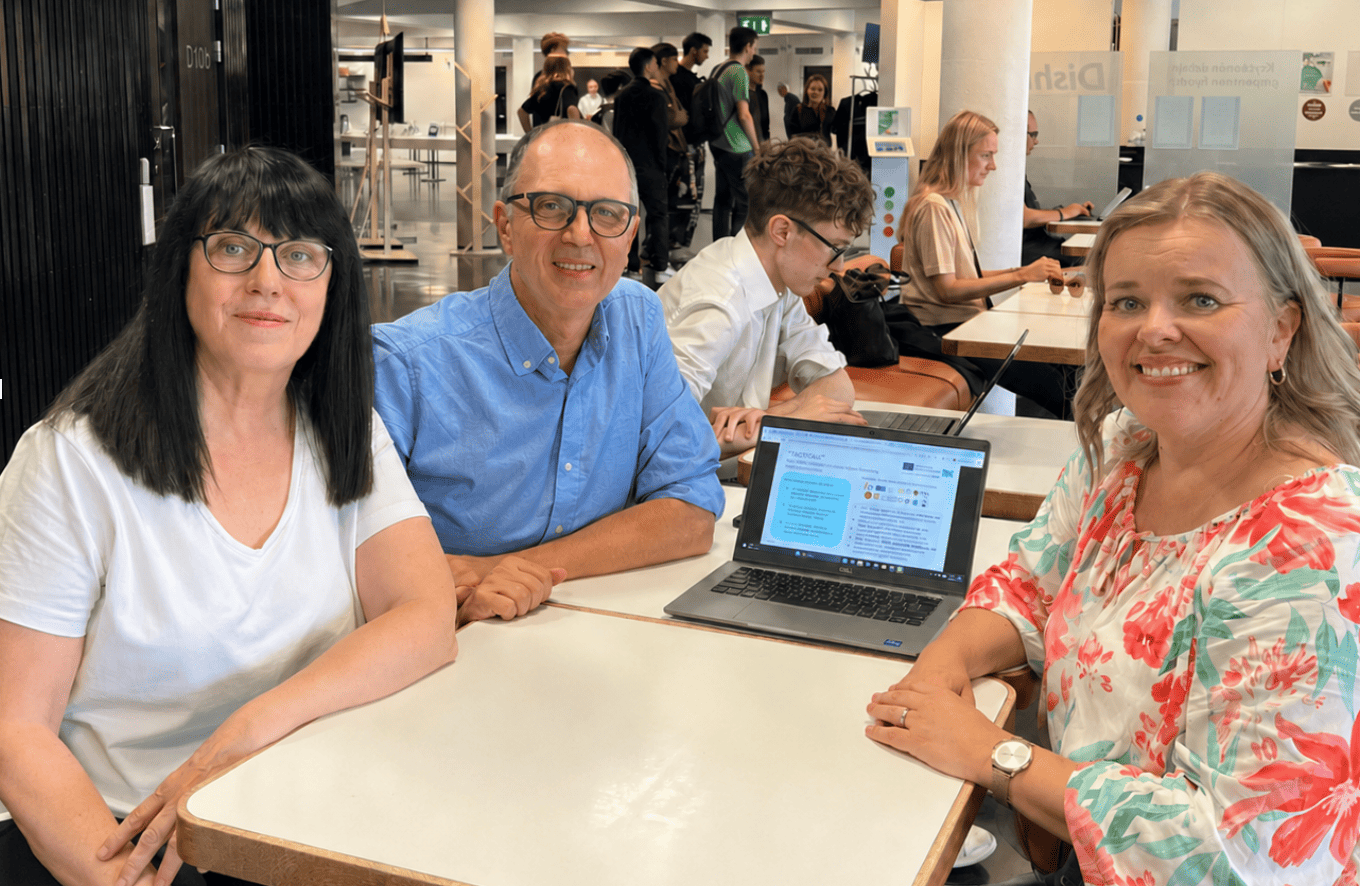
Exchange with Hanna Davis in Tampere
Guàrdia and Maina met with Hanna Davis, Principal Researcher in the area of Pedagogical Innovations and Culture at Tampere University of Applied Sciences (TAMK). Her work lies at the intersection of professional learning, teacher education, and critical studies on digitalization.
The meeting provided an opportunity to exchange experiences related to DIGITAsia and identify shared interests arising from collaboration with Asian universities. Discussions also began regarding a potential Erasmus visit and opportunities to explore new initiatives or a project based on the experience gained by both parties.
Research-Based Teacher Education with Auli Toom
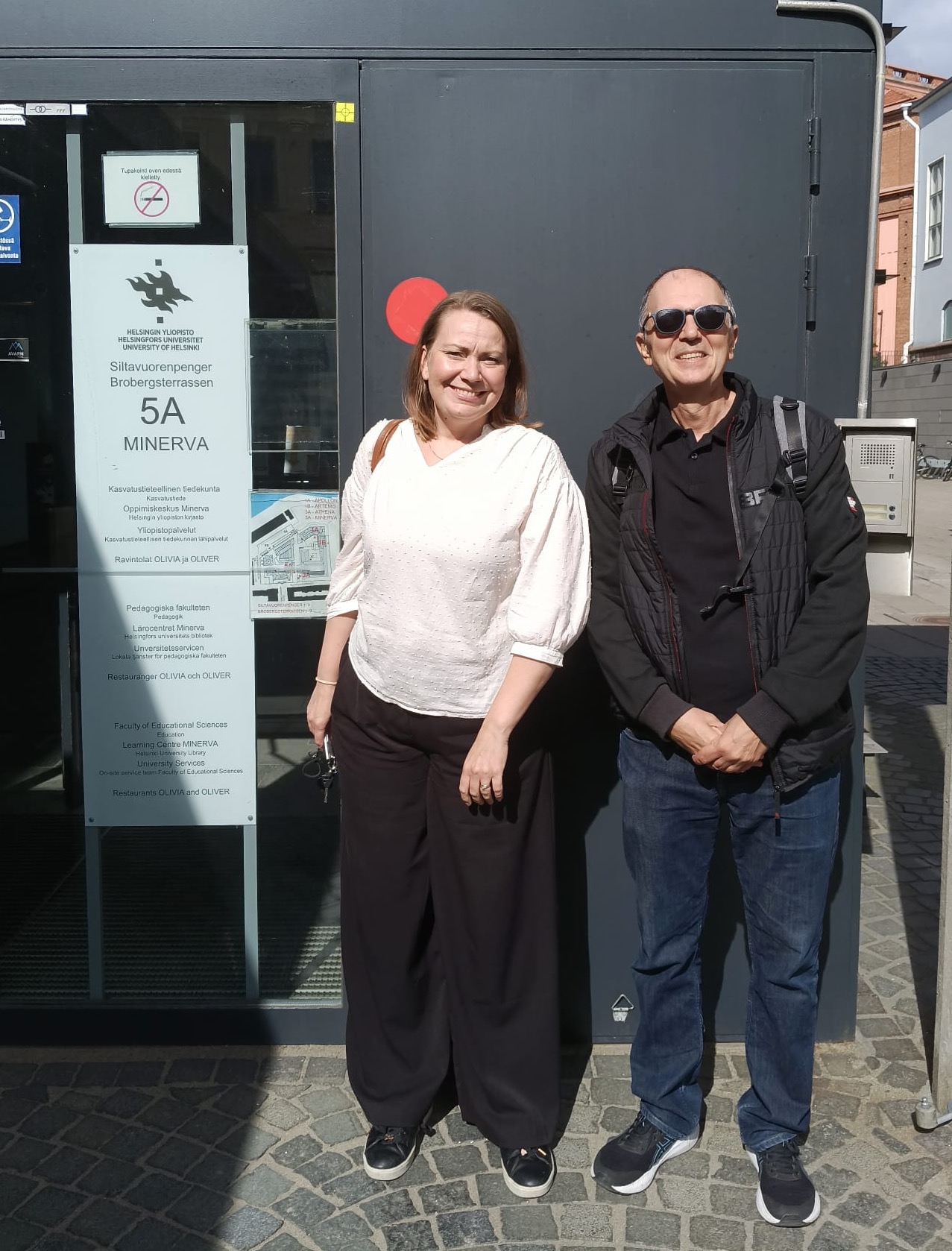
The researchers also held a meeting and an academic interview with Auli Toom, Professor of Higher Education, Director of the Centre for University Teaching and Learning, and Vice-Dean for Research at the Faculty of Educational Sciences, University of Helsinki. Toom also chairs the Finnish Teacher Education Forum for the 2024–2027 term.
The conversation focused on the Finnish approach to Research-Based Teacher Education (RBTE) and on how research integrates with teacher training and professional practice.
A key feature was precisely that the RBTE is not conceived merely as the inclusion of research methodology courses, but rather as an orientation that permeates the entire teacher training system: the university environment, the curriculum, methodological training, research projects, school-based practicums, and the research activities of university faculty themselves.
The interview also provided an opportunity to delve into the combination of specific research methods courses with the cross-cutting integration of research from the very beginning of teacher training, as well as the role of internships and supervision in linking scientific knowledge with real-world classroom situations. In this model, the goal is not necessarily to turn future teachers into professional researchers, but rather to foster an inquiring mindset that enables them to better understand, interpret, and substantiate their educational decisions.
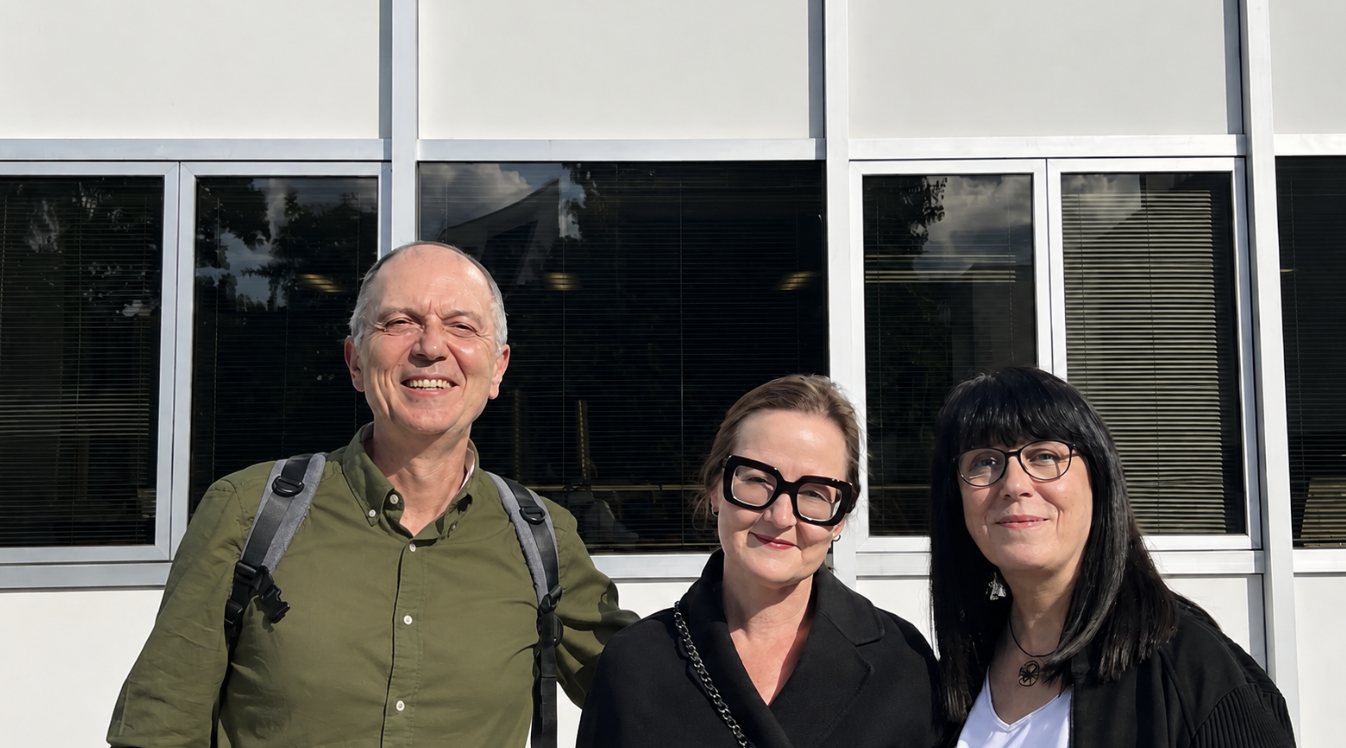
The Finnish Teacher Education Forum and teacher training policies
The visit also included a meeting with Tiina Lindfors, from the University of Helsinki and academic coordinator of the Finnish Teacher Education Forum.
The Forum constitutes a national network bringing together universities, universities of applied sciences, practical training centers, and other stakeholders in the education system. During its current 2024–2027 term, it seeks to advance teacher education through broad, research-based cooperation, with a particular focus on continuous professional learning, collaboration and networking, the anticipation of future needs, and the development of evidence-based quality assurance systems.
The meeting thus provided a complementary perspective on how Finland integrates research, educational policies, institutional networks, and teacher training development, and opened up new possibilities for exchange in an area of growing interest for educational research.
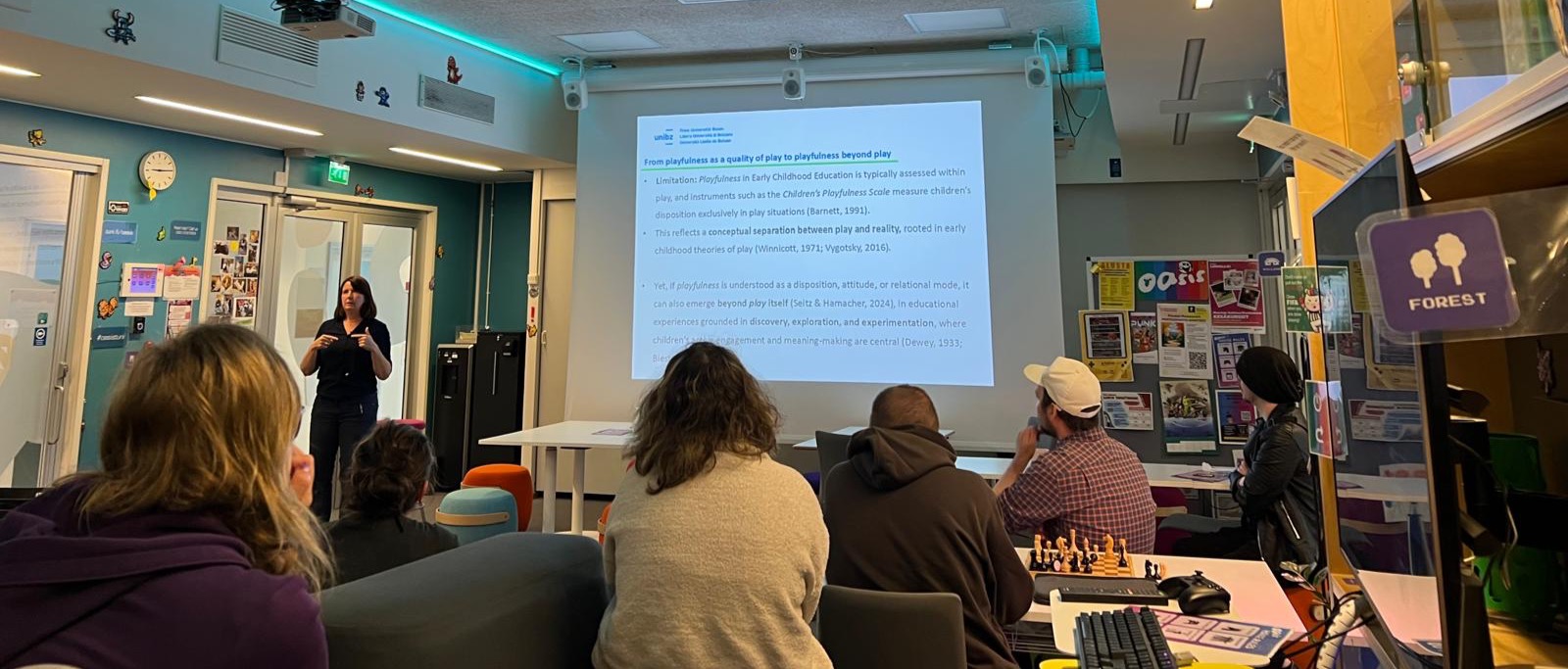
Academic activities in Finland continued into the first week of September. On September 3, Lourdes Guàrdia attended an OASIS Talk at Tampere University given by Francesca Berti—a researcher at the Faculty of Education at the Free University of Bozen-Bolzano—titled Playfulness in Education: A Pedagogical Perspective Beyond Play-Based Learning. The talk examined playfulness from a pedagogical standpoint that expands upon the traditional approach to play-based learning, exploring the potential of play and playful educational spaces beyond the early stages of education. The lecture was particularly relevant to the UOC’s Education Studies program and the Primary Education degree. Access the lecture recording here: https://www.youtube.com/live/TZnDBXOPElg?is=EWqhG3oLtXQtQrgq
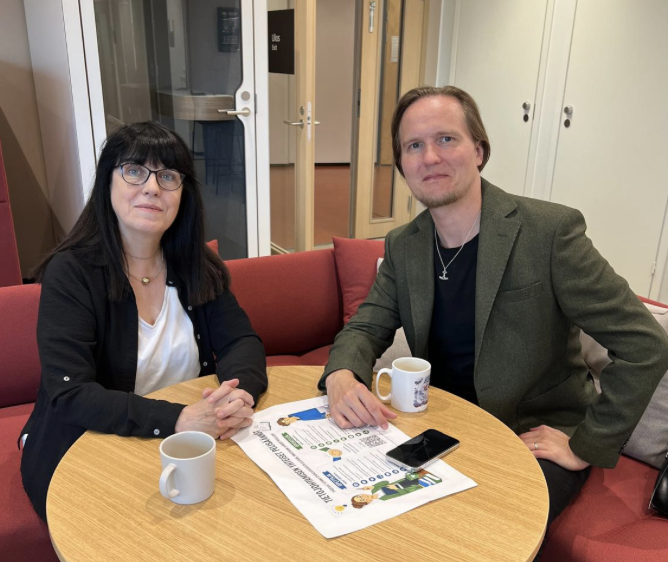
During that same period, Guàrdia also met with Professor and researcher Henri Pirkkalainen at Tampere University’s Hervanta campus. The meeting provided an opportunity to exchange views on shared research interests—such as micro-credentials—and to explore potential avenues for academic and research collaboration, thereby strengthening Edul@b’s ties with Tampere University researchers for the submission of joint research projects.
Applied research and international collaboration
Participation in ECER 2026 and subsequent meetings demonstrates the complementarity between scientific dissemination, applied research, and the building of international networks. The two papers presented in Tampere translate broader debates regarding digital transformation, quality, and pedagogical responsibility into concrete tools—specifically, the Course Quality Scorecard and the framework for integrating AI into learning design.
At the same time, the meetings held in Tampere and Helsinki are expanding the dialogue to encompass teacher training, university collaboration, and the development of new international initiatives. These areas align directly with the work of the Edul@b Research Group and the Futures of Education in the Digital Age Research Centre (UOC-FuturEd) regarding learning design, artificial intelligence, educational quality, digital transformation, and teacher professional development.