Edul@b at HELMeTO 2026: learning design, artificial intelligence, and digital transformation in higher education
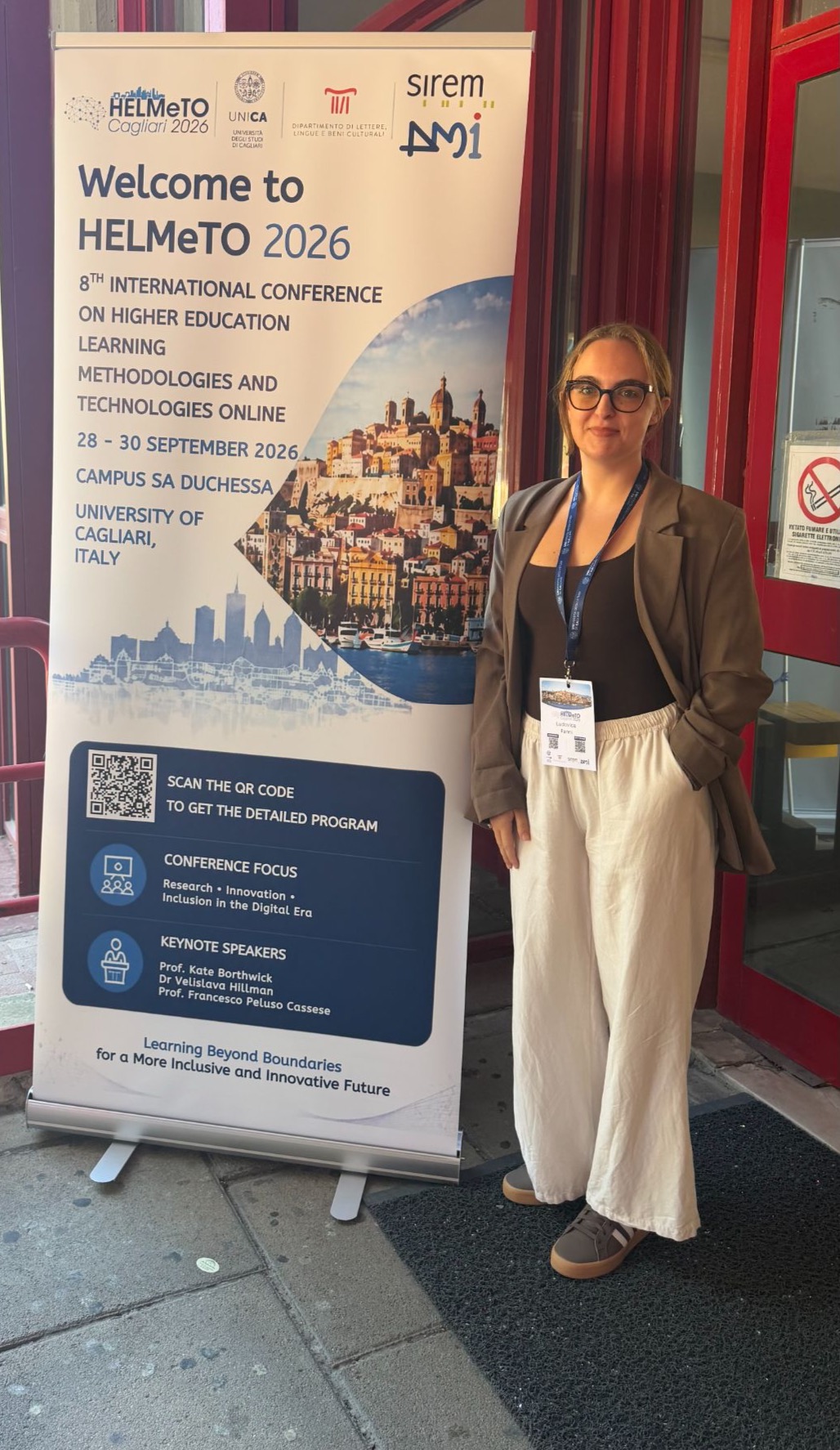
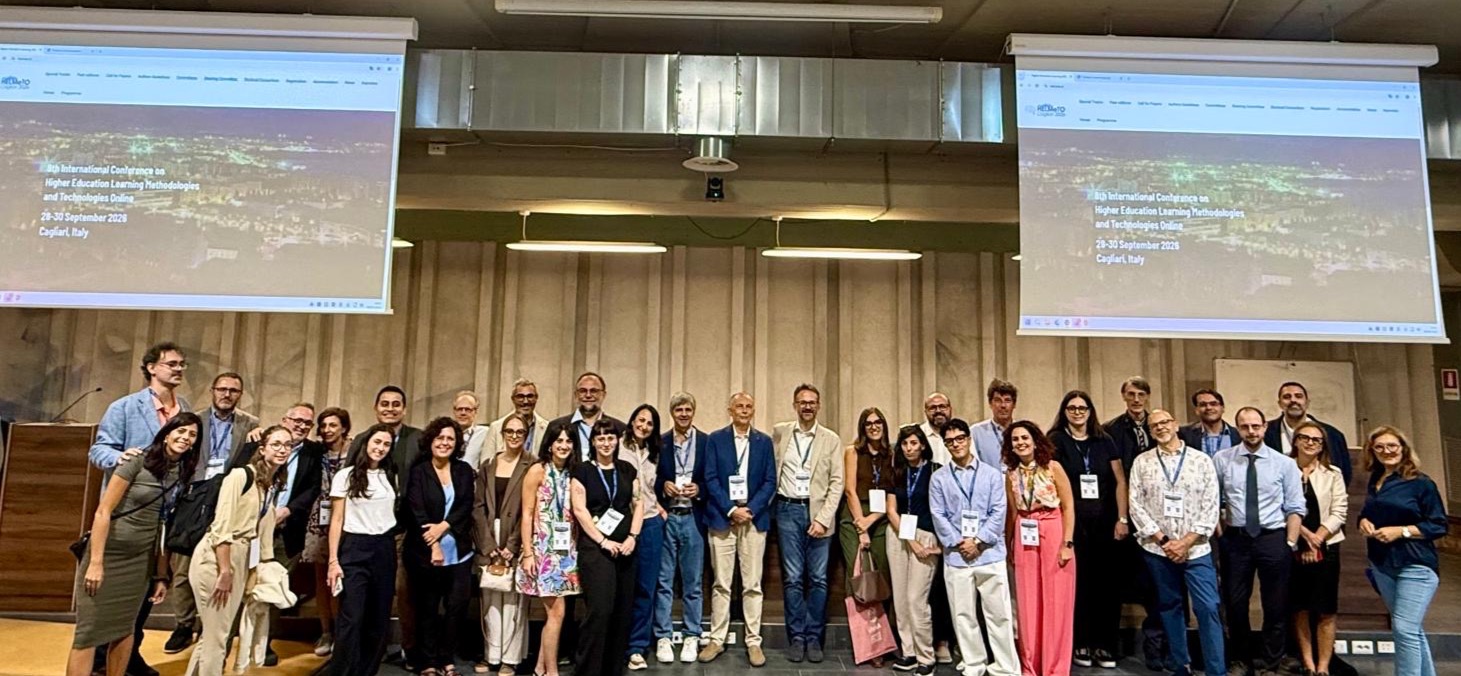
Ludovica Fanni, Edul@b’s researcher, Futures of Education in the Digital Age Research Centre (UOC-FuturEd), participated as a speaker at the 8th International Conference on Higher Education Learning Methodologies and Technologies Online (HELMeTO 2026), held in Cagliari (Sardinia, Italy) from September 28 to 30. During the conference, Fanni presented two papers on behalf of the Open University of Catalonia (UOC), within the framework of two European projects in which the research group plays a prominent role.
The two presentations address—from complementary perspectives—how to drive the digital transformation of higher education, focusing on pedagogy, ethics, and support for faculty. Abstracts for both papers are already available and can be consulted in the conference’s official Book of Abstracts.
HELMeTO 2026: pedagogical frameworks and tools for the digital age
The HELMeTO conference is an international forum that examines digital learning methodologies and technologies in higher education. At this year’s event, Edul@b presented two frameworks (and toolkits) developed to facilitate informed teaching decisions and technology integration.
On the one hand, the work of the ADMIT project, led by Lourdes Guàrdia at the UOC, was presented. On the other, the research conducted within the framework of the DIGITAsia project, led by Marcelo Maina on behalf of the UOC, was showcased.
ADMIT Project: the LLM-ed framework for integrating Generative AI into learning design
The paper titled “Reframing Learning Design for the Age of GenAI: The LLM-ed Framework” by Lourdes Guàrdia, Ludovica Fanni, Marcelo Maina, and Nati Cabrera, presented the progress of the European project ADMIT (generative Ai and large language Models In higher educaTion).
This work stems from the need to address the rapid emergence of generative artificial intelligence (GenAI) in university classrooms. In contrast to usage that is often purely technological, the LLM-ed framework proposes structuring the integration of GenAI based on learning design methodologies, thereby ensuring pedagogical soundness and faculty agency.
The framework is organized into three key phases:
- Analysis and planning: where AI acts as collaborative support to lay the pedagogical foundations.
- Activity design: where AI acts as a creative co-designer to align objectives, activities, and assessment.
- Development and production: where AI provides technical and content-related assistance for the creation of inclusive resources.
Furthermore, the presentation showcased the associated toolkit, comprising practical tools such as the Ethics and Compliance Check (ECC), the AI-LD Protocol, and the Quality Safeguards (QS), all validated using a Design-Based Research (DBR) methodology across 12 higher education institutions.
DIGITAsia Project: digital transformation driven by pedagogy and Education 5.0
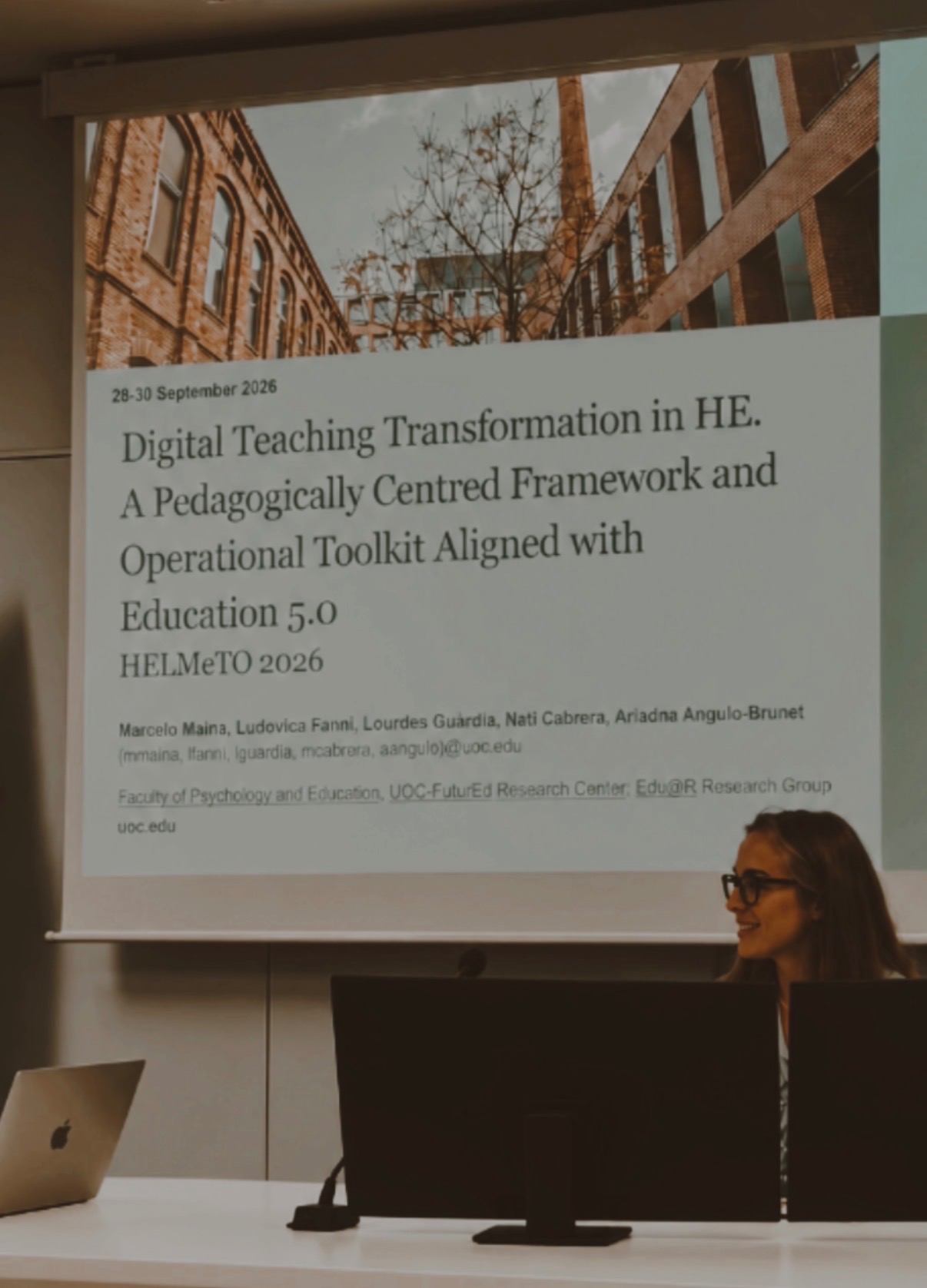
The second presentation, “Digital Teaching Transformation in Higher Education: A Pedagogically Centered Framework and Operational Toolkit Aligned with Education 5.0”, was prepared by Marcelo Maina, Ludovica Fanni, Lourdes Guàrdia, Nati Cabrera and Ariadna Angulo-Brunet within the framework of the DIGITAsia (Digital Transformation of Asian Higher Education) project.
This research proposes a digital teaching transformation framework (DTTF) and an implementation toolkit based on the principles of Education 5.0: a human-centric vision, inclusivity (Universal Design for Learning – UDL), data-driven learning, and continuous improvement. The DTTF is organized around two interconnected dimensions:
1. Institutional Enabling Dimensions: It encompasses the university’s strategic drivers (vision, digital strategy, leadership, and governance) and capacity building (secure digital infrastructure, inter-institutional collaboration, and faculty professional development).
2. Teacher Dimension: It focuses on the knowledge and competencies of the teaching staff, promoting a data-driven, inclusive approach to learning design oriented towards learning outcomes (LOs), with a firm commitment to teaching quality.
The operational toolkit, based on the DTTF, guides institutions and educators through three fundamental phases (Learn, Plan, Do):
- Maturity Model: diagnostic tool to assess the current state of digital and teaching capabilities.
- Road Map: strategic planning table for defining priorities and objectives to be achieved.
- Action Plan: operational guide for the implementation of actions and improvements in the courses.