Edul@b at the UOC Staff Week 2026: Contributions on Learning Design and Institutional Innovation and the challenges of Generative AI in Higher Education
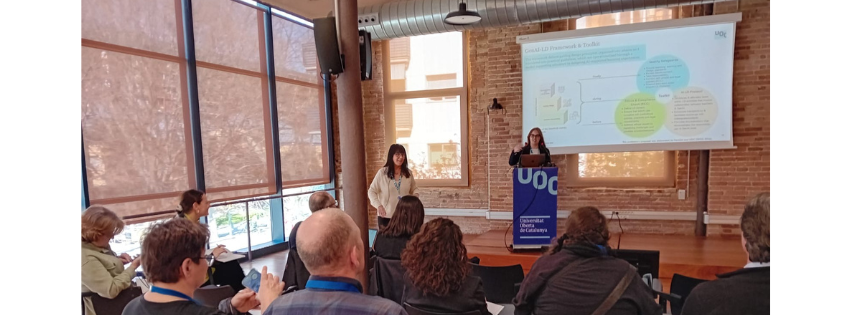
The UOC Staff Week 2026, held from 16 to 19 March at the UOC campus, brought together professionals from different European universities from Latvia, Turkey, Germany, Greece, the Netherlands, Cyprus, Spain and Iceland, to share experiences on educational innovation, digital transformation and international cooperation. In this context, the members of the Edu@b group presented five sessions linked to AI challenges, which are especially relevant for higher education institutions.
The participation of Marcelo Maina, Lourdes Guàrdia, Nati Cabrera and Ludovica Fanni in the UOC Staff Week 2026 allowed to place two central issues for higher education: the incorporation of generative artificial intelligence in the design of learning activities and the need to articulate strategy, knowledge and quality in the processes of digital transformation. On the other hand, the presentation of Montse Guitert, Teresa Romeu and Marc Romero addressed the emergence of Generative AI in the university community. All this, through two studies on the perspective of teachers and students regarding this new technology. In addition, providing recommendations for a critical and responsible look at the use of AI. We also have the presentation of the members of Edul@b Jordi Conesa and Josep M. Sabaté on mentor bots promoted by AI and the importance of institutional transformation through technological innovation.
1. Design learning activities with GenAI from a pedagogical framework
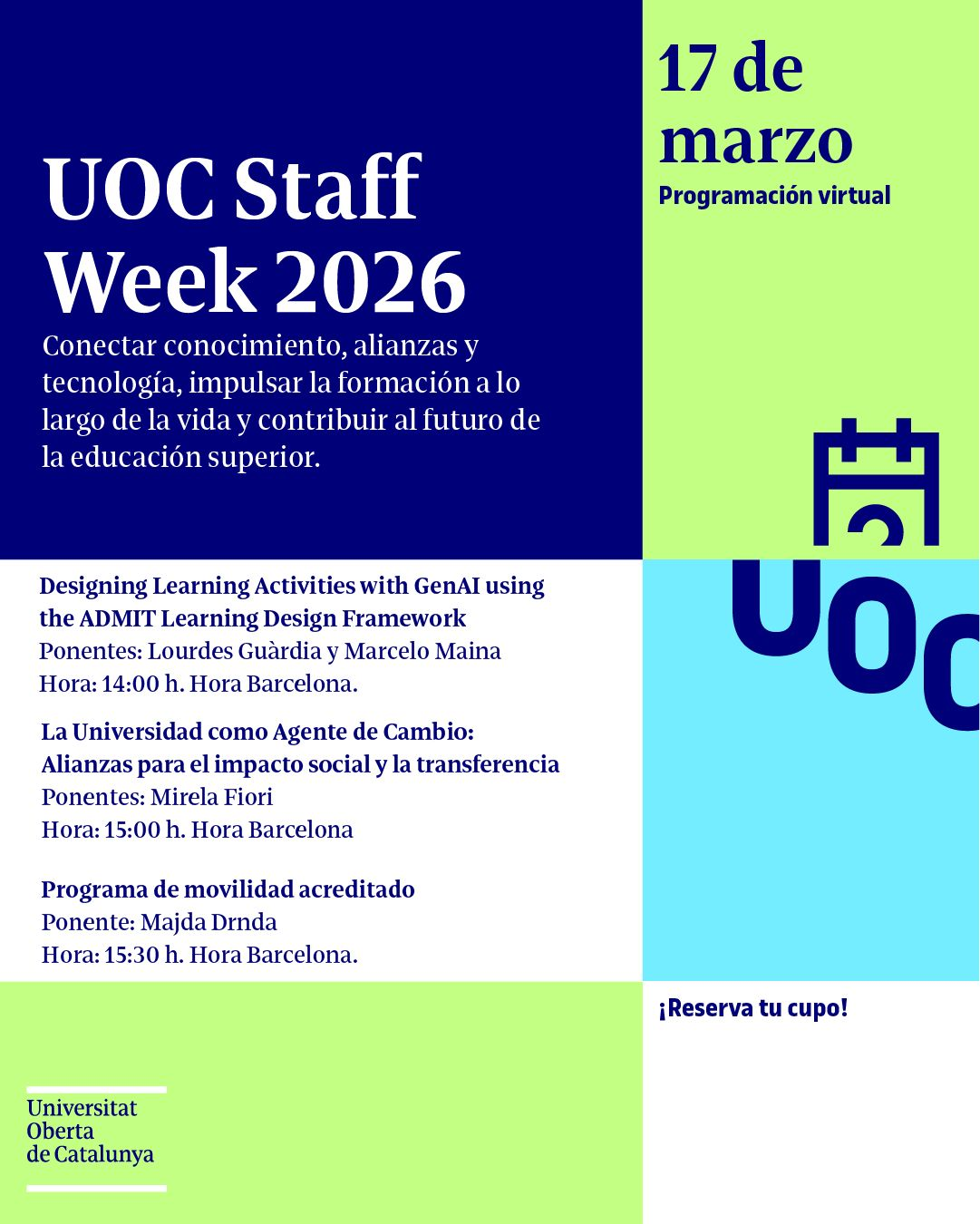
The first session, held on March 17, was led by Lourdes Guàrdia, Marcelo Maina, Nati Cabrera and Ludovica Fanni, whose presentation was entitled “Designing learning activities with GenAI using the ADMIT Learning Design Framework” which combined an exhibition part and an operational demonstration of the operation of the design framework. The proposal focused on the use of generative AI as support for teachers in the learning design process.
The focus of the session was the presentation of the AI-LD framework developed within the European Erasmus+ ADMIT project, a framework designed to help integrate generative artificial intelligence tools in the design of learning activities with clear pedagogical criteria. The proposal focuses on the coherence between learning outcomes, activities and evaluation, and proposes AI as a resource that can contribute to the planning, adaptation and improvement of training experiences
One of the most relevant aspects of the approach presented is that it avoids a purely technological approach. The framework incorporates issues such as teaching pedagogical capacity, transparency, ethics and attention to diversity, and places the integration of GenAI within a logic of design based and led by the teacher. At a time when many universities are exploring uses of these technologies, this type of proposal is useful because it allows us to move from the general interest in the tool to a more specific reflection on how and why to incorporate it into teaching.
2. Knowledge, strategy and quality for a transferable digital transformation
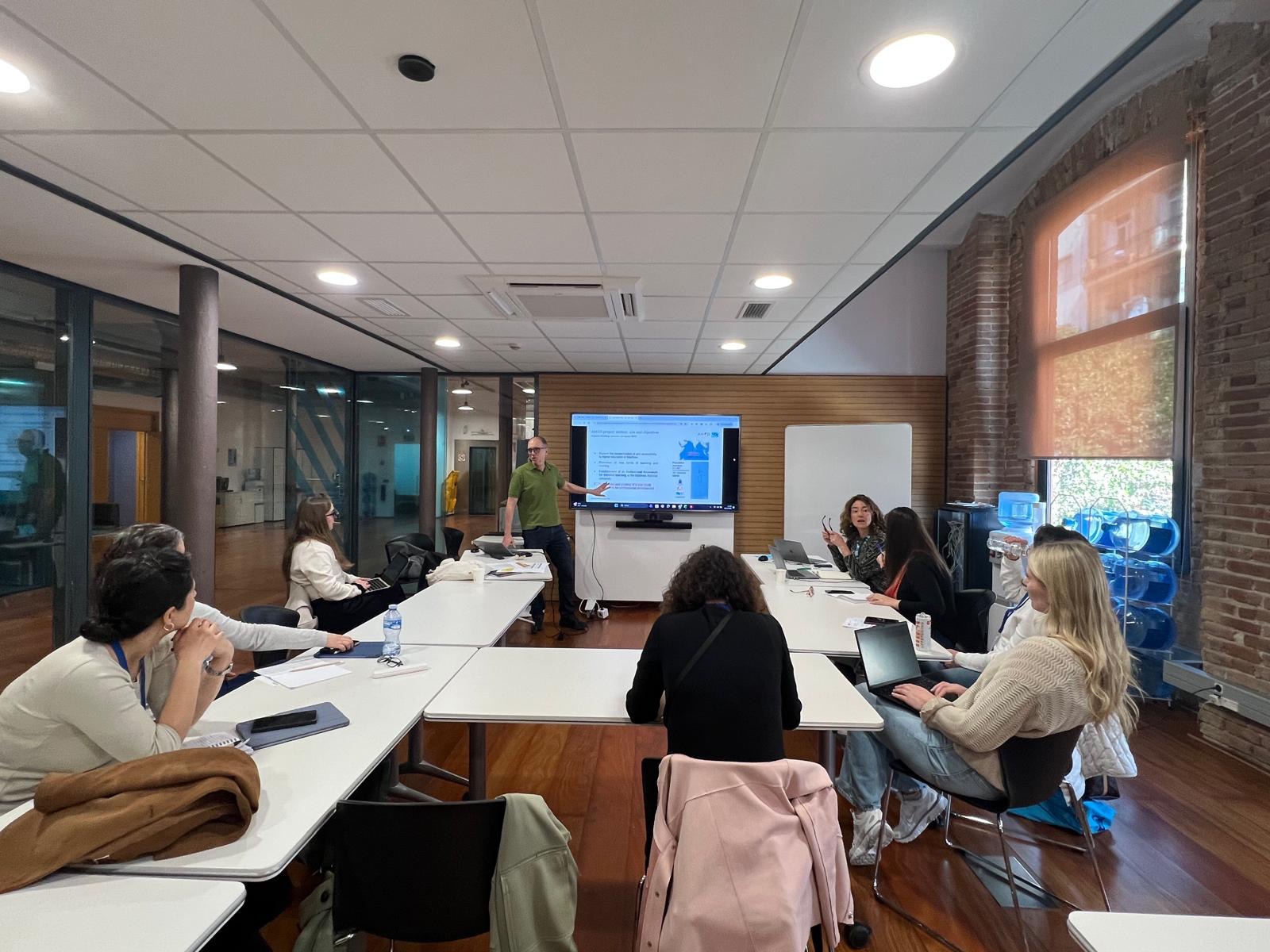
In the second session, “Connecting knowledge, strategy, and quality: three transferable initiatives for Higher Education Digital Transformation” on March 18, also led by Lourdes Guàrdia, Marcelo Maina, Nati Cabrera and Ludovica Fanni, the focus shifted to the institutional plan of digital transformation. The session proposed a reflection on how to connect three dimensions that often appear separated in the processes of university change: the generation and circulation of knowledge, the strategic definition and the quality mechanisms.
The session articulated this idea through three transferable initiatives. The first, linked to a project together with Union for the Mediterranean (UfM), which brings together 53 countries, in which an awareness and knowledge transfer experience was carried out to strengthen digital education mainly in the Mediterranean area. The action involved eight webinars and a handbook combining a strategic institutional approach and one focused on teaching and learning processes.
The second initiative, AMED, showed a more institutional and applied dimension. The work developed with the Maldives National Universityes oriented to accompany a transition from a face-to-face model to a more hybrid and bimodal model, combining diagnosis, roadmap development, teacher and technical staff training, infrastructure strengthening and co-creation of a training program.
The third initiative, DIGITAsia, provided a particularly robust framework for thinking about scalability and transferability to 7 universities in 3 Asian countries (Sri Lanka, Malaysia and Maldives). The presentation unveiled the Digital Teaching Transformation Framework (DTTF) and its associated toolkit, with instruments such as the maturity model, the roadmap, the action plan and the Course Quality Scorecard (CQS).
Here lies one of the most solid contributions of the session: showing that digital transformation cannot be reduced to a sum of isolated tools or projects. It requires an ecosystem in which institutional strategy, teacher skills, infrastructure, collaboration with other actors and assessment and improvement instruments are connected. The workshop’s own dynamics, with group exploration of the instruments and feedback collection on their consistency, applicability and balance between technical and pedagogical dimensions, reinforced this approach oriented towards real adoption.
Both sessions show a complementary line of work. The first is at the level of pedagogical design and teaching practice; the second is at the level of institutional strategy and quality. This combination is particularly relevant in the current context, in which universities need to respond both to technological changes and to the need to consolidate more solid, reflective and sustainable educational models.
3. Challenges of Generative AI in Higher Education: Towards a critical and ethical use
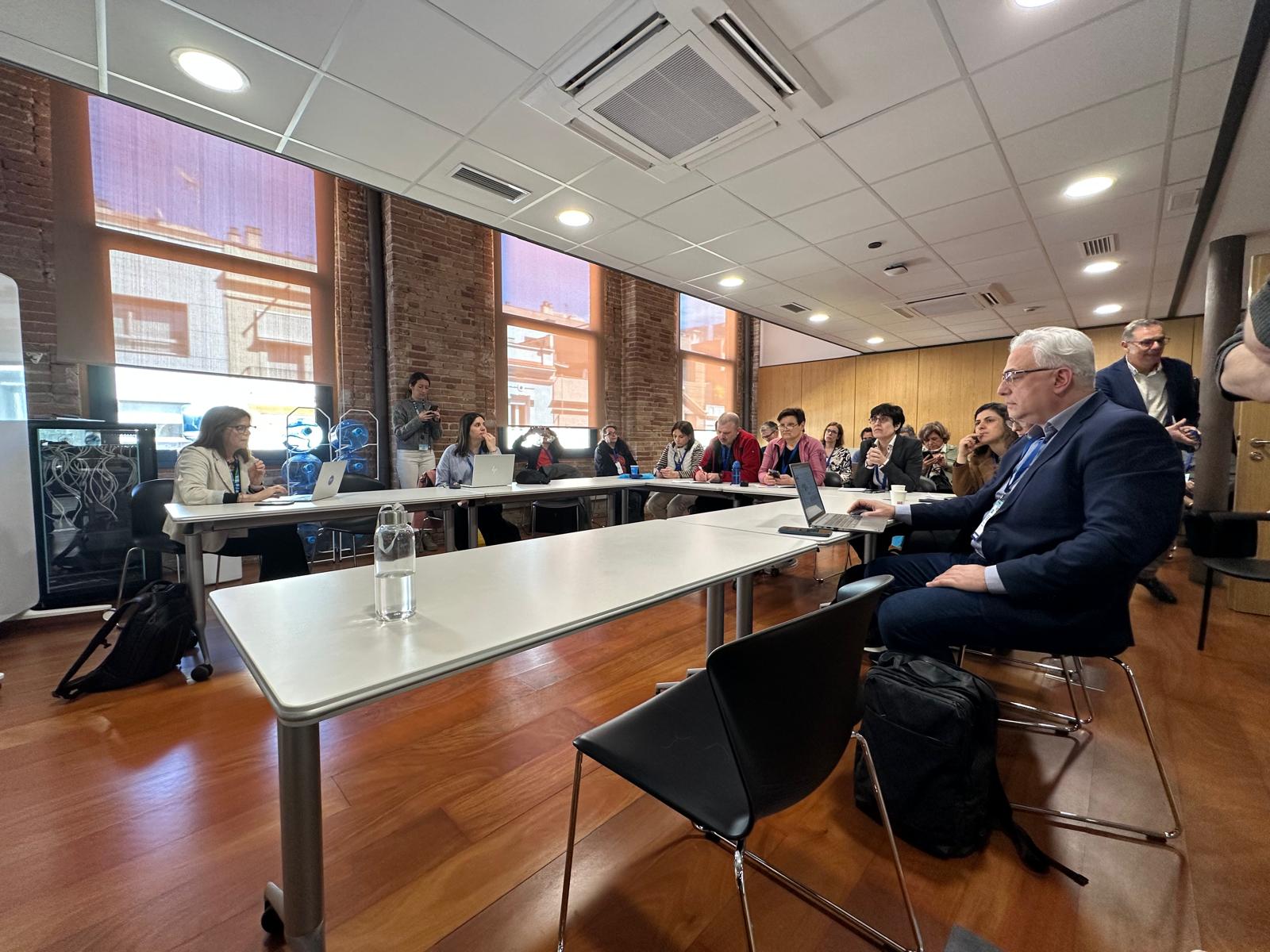
The researchers from the Edul@b Research Group belonging to the Centre for Research in the Futures of Education in the Digital Era (UOC-FuturEd), Dr. Montse Guitert, Dr. Teresa Romeu and Dr. Marc Romero presented the research on the use of AI in students and university teachers under the title: “Challenges of Generative AI in HE: Towards a Critical and Ethical Use”. Generative AI has become a tool commonly used in the university environment, the study presents how the university community perceives and uses GenIA. Also, what methodological and ethical strategies must be implemented to ensure responsible use.
More than 900 students during the 2023-2024 academic year participated in the study to learn how specific AI training can lead to a more responsible and critical use by university students. 40% of the students declared intermediate or high knowledge without having received training, while more than 76% highlighted an improvement in their knowledge of AI with the training resource.
The study was carried out with 686 students in the first semester, who did not obtain resources. Then, in the second semester, the test was carried out with 243 students, this time with resources, debate on AI and teamwork. A quantitative methodology was used from an online questionnaire and the Likert scale. A qualitative approach was also made through open answers and analysis of the subject’s forums.
Among the main results are the following:
- Increased perceived knowledge: training resources increase the perceived knowledge of AI students, especially in issues of critical awareness such as academic integrity or verification of information sources.
- Confirmation of an effective strategy: combining educational resources regarding the functioning of AI with open debates improves the ability to make decisions regarding the use of this tool.
- The field of study is a key aspect: students in Humanities and Engineering show a better understanding of resources than those in the field of Psychology and Education. This highlights the need to adapt learning resources.
- An ethical perspective: actions such as debates and practical cases help us to approach ethical issues regarding the use of AI in higher education.
On the other hand, university teachers use GenIA in the different teaching tasks, such as resource design, evaluation and different learning processes. Specifically, teachers make use of GenIA for the following tasks: design of activities and resources, creation of evaluation instruments, analysis of works, creation of messages and streamlining of transversal processes.
In the study about 80 teachers were part of the subject, actions were also carried out such as a survey (with 39 teachers) and focus discussion groups on the use of GenIA (with 48 teachers). Among the risks identified from the aforementioned actions are the following:
- Decreasing cognitive processes: mechanical and acritical use of AI that leads to a loss of creativity, reflection and critical vision of the tool.
- Difficulty in evaluating students: great doubts about the authorship and the sources of the works delivered by the students.
- Excessive use and dependence on AI: concern about the disconnection of students with the training process.
- Loss of critical gaze: students delegate AI tasks that are crucial in learning.
Recommendations for a critical and responsible use of GenIA:
- Normalize the use of AI from a clear regulation and pedagogical objective.
- Promote comparative activities such as requesting the student’s own production and, subsequently, making use of AI to polish the work or the use of different prompts during the creation of the work.
- Develop critical thinking about the use of AI based on the review and improvement of the responses we obtain from the tool.
- To train early, the functioning of algorithms and the detection of biases.
- Promote a critical, ethical and reflective debate based on real situations.
Find out more in this article: Romeu, T., Romero, M., Guitert, M., Baztán Quemada, P. (2025). Challenges of generative Artificial Intelligence in higher education: promoting its critical use among students. RIED – Revista Iberoamericana de Educación a Distancia, 28(2). https://doi.org/10.5944/ried.28.2.43535
4. Chatbot promoted by IA Generative and Institutional Innovation in Higher Education
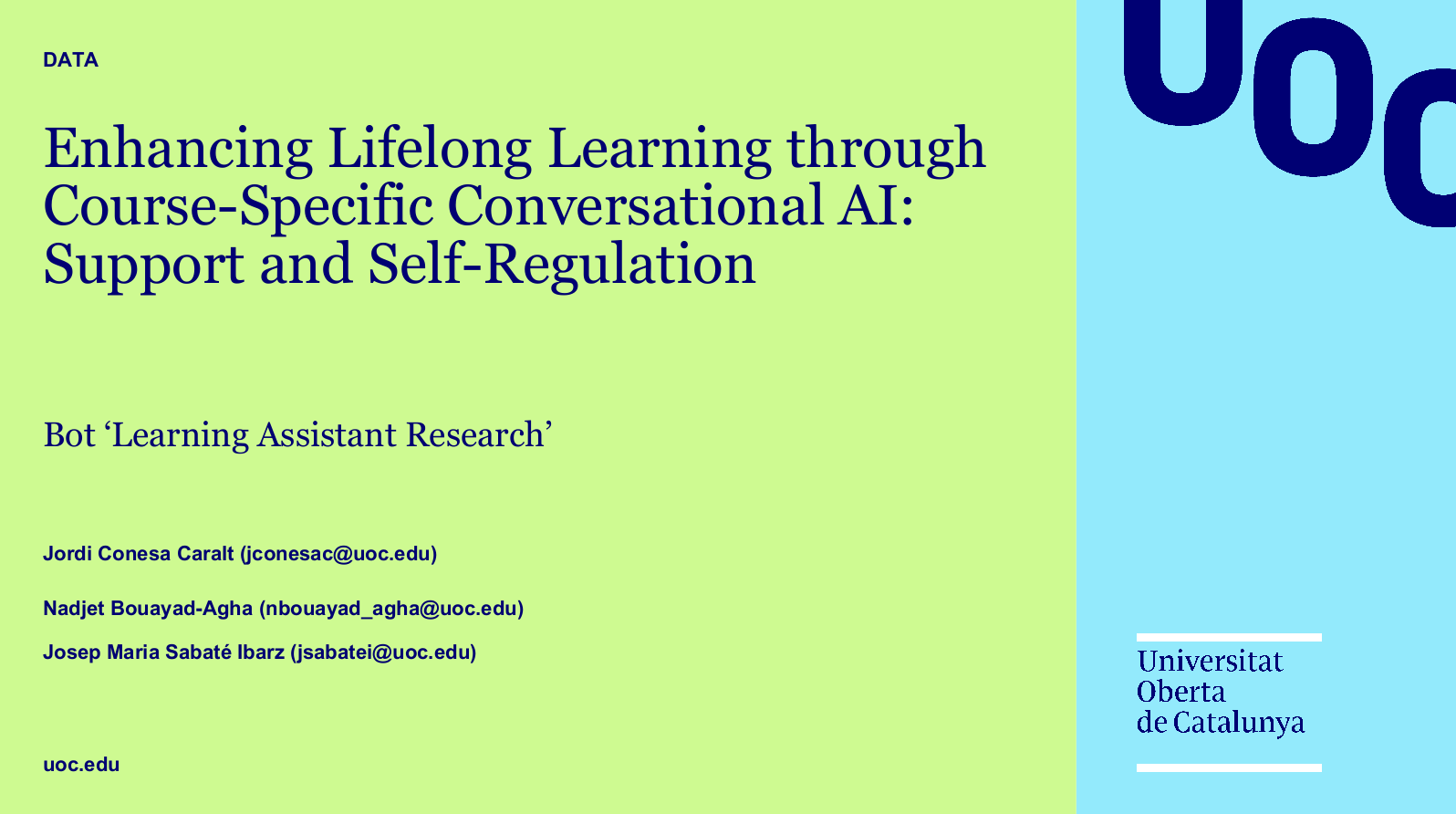
Through the presentation “Enhancing Lifelong Learning through Course-Specific Conversational AI: Support and Self-Regulation” by Jordi Conesa, Nadjet Bouayad and Josep M. Sabaté found that students who train online are facing various types of challenges when carrying out their training. Obstacles that limit their performance and increase the percentage of dropout from their studies, such as student isolation, lack of personalization and limited supervision.
A new system seeks to solve these problems through three pillars or axes:
- Adaptive question generation system: from the curriculum and with Bloom Taxonomy, it seeks to generate learning routes.
- Mentor Bot: conversational agent that guides the student with routes adapted to their performance.
- Teacher Dashboard: control panel with which the teacher can monitor the learning process and the student’s interactions in real time.
The question generation process is carried out through 3 phases with human-in-the-loop: identification of key themes, expansion of the Bloom Matrix and systematic generation of questions.
The mentor bot adopts a somatic person who prioritizes the guide beyond direct responses. This mentor bot follows the following dynamic route: selection of the following question, IN dialogue (iterative), formative evaluation and OUT dialogue (clarifications).
In the event that the student passes a question, he/she advances to higher levels of the Bloom matrix, in the event that it fails, he/she retreats. The experiment has been carried out in 9 courses of 4 subjects and in 2 languages, 8,627 learning routes have been generated with more than 206,000 questions generated. The potential students for this test were 600 and 12 with 89 dialogues started have participated actively. Participation was voluntary and external to the campus. A lack of participation is evident when the activity is outside the institutional LMS.
5. Transforming institutional innovation: an experienced framework for the exchange and recognition of explicit knowledge
The research “Transforming Institutional Innovation: An Experienced Framework for Explicit Knowledge Sharing and Recognition” promoted by Jordi Conesa, Josep Cobarsi, Eugenia Santamaria and Ferran Adelantado began in 2017, when a study was carried out at the UOC’s Department of Computer Science, Multimedia and Telecommunications with 60 teachers and 7,800 students, 28% of teachers had participated in innovation projects since 2011, but the results of this research were not disseminated or transferred to real environments. Therefore, we find an innovation without visible impact, without registration, dissemination and application.
As a solution, a participatory framework was created from a bottom-up process with the teachers, a definition on how to share this innovation was agreed upon. It was concluded that it was necessary to create a knowledge management system to achieve this, to be able to share and understand the innovations made.
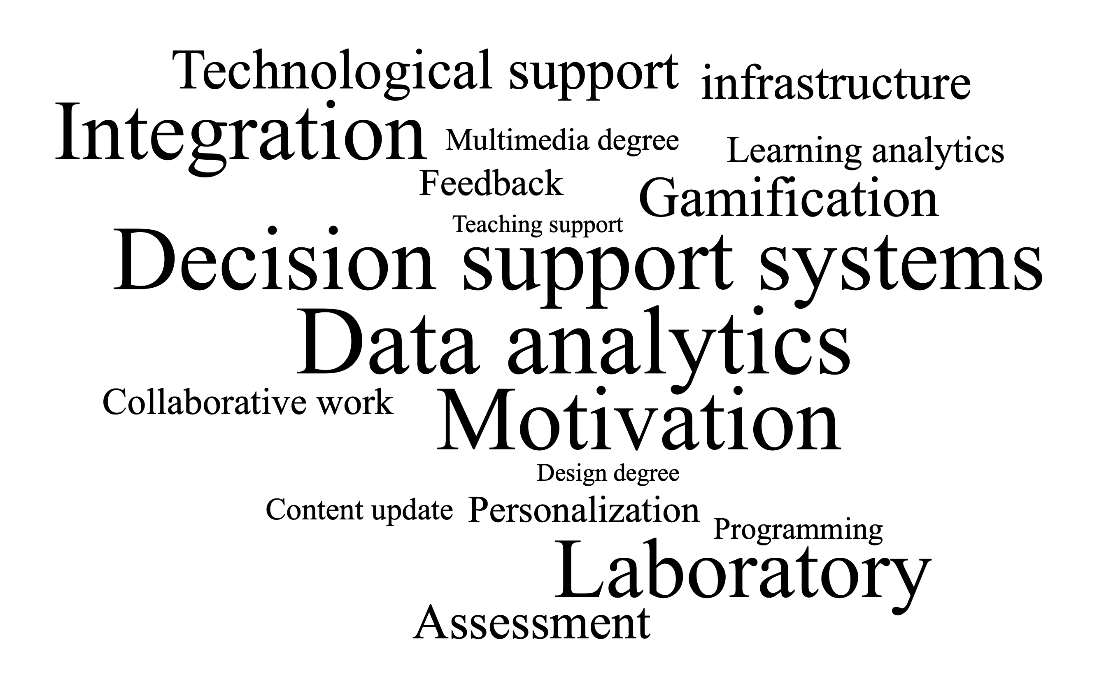
From there, more than 125 accredited innovations were registered, more than 300 keywords of which 17 keywords define 75% of the innovations and 15 thematic clusters were identified: innovations, eAssessment, teacher assistance, learning resources, laboratories, anti-plagiarism tools and observatory, among others.
Participation in the UOC Staff Week 2026 aims to be a contribution to international debates on teaching innovation and the digital transformation of higher education. Rather than presenting closed solutions, the sessions provided frameworks of analysis and transferable tools to think about how to integrate technology into the university with a pedagogical and institutional sense.