3rd DIGITAsia International Meeting in Barcelona: Advancing Towards Education 5.0 and Digital Teaching Transformation
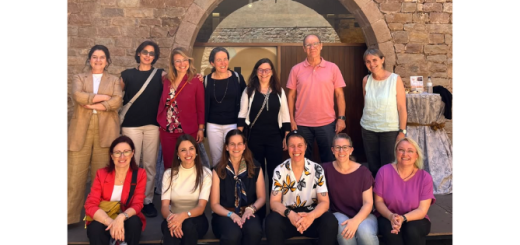
From November 10 to 13, 2026, the Universitat Oberta de Catalunya (UOC) hosted in Barcelona the third international meeting of the European project DIGITAsia (Digital Transformation of Asian Higher Education), co-funded by the European Union’s Erasmus+ programme. Held at the Poblenou campus and coordinated by the UOC members participating in the project, the meeting brought together representatives from the nine partner institutions in Europe and Asia: University of Zagreb – Department of Computing and Technology (FOI), University of Peradeniya (UOP), Villa College Maldives (VCM), The Maldives National University (MNU), Universiti Kebangsaan Malaysia (UKM), Sri Lanka Technology Campus (SLTC), Islamic University of Maldives (IUM), Universiti Teknologi Malaysia (UTM), and UOC itself.

The institutional welcome featured remarks by Dr. Teresa Guasch, Vice-Rector for Teaching and Learning at UOC, who presented the institution’s digital transformation process, centered on students and learning from a balance between technological challenges and opportunities. She highlighted the commitment to moving beyond punitive surveillance through authentic assessment, dialogic feedback for improvement, Universal Design for Learning, and a critical and ethical integration of generative artificial intelligence with shared governance among faculty, students, and innovation teams. For his part, Dr. Albert Sangrà, director of the Futures of Education in the Digital Age (FuturED) research center, positioned UOC as a pioneering benchmark by showing how this process is driven from the center by combining rigorous research, strategic reflection, and the imagination of possible futures for education. The day concluded with a visit to UOC’s Interdisciplinary R&I Hub to strengthen research synergies.
Teacher Training in Education 5.0, Balanced Design Planning, and Quality Improvement
During the meeting, organizational and management matters were addressed, focusing on training faculty from Asian universities to incorporate Education 5.0 and design personalized, inclusive learning experiences supported by emerging technologies. In this teacher training program, faculty used the Balanced Design Planning application to redesign their courses, ensuring alignment between learning outcomes, activities, and assessment, while leveraging its real-time design analytics and contextual artificial intelligence support. After implementing these pilot courses in the classroom and gathering evidence on their performance, the institutions now face a new phase of iterative review and redesign based on real-world experience.
To date, the training program has involved 73 trainers and 327 faculty members from the seven Asian institutions, with 359 completion certificates awarded and 186 final projects (Capstone) completed. In addition, 209 redesigned courses have been cataloged (110 hybrid, 80 face-to-face, and 19 fully online), expected to impact around 7,177 students, with the participation of 205 instructors and 60 facilitators.

DIGITAsia: Digital Teaching Transformation Framework for Higher Education.
This process connects at the micro level with the CQS (Course Quality Scorecard), included in the toolkit developed by the UOC team after analyzing and synthesizing the world’s most recognized approaches to course quality. Aimed at faculty to conduct self-assessments and peer evaluations geared toward continuous improvement, the CQS reinforces the human-centric values of Education 5.0. This entire training and redesign cycle is framed within the Digital Teaching Transformation Framework (DTTF) and its two dimensions: the Institutional Enabling Dimension, which articulates vision, leadership, and governance alongside digital infrastructure, partnerships, and teacher training; and the Teacher Dimension, which encompasses learning design, quality-oriented teaching—where the CQS operates—and teacher literacies. Thus, these initiatives provide tangible evidence for institutional diagnosis, link to the strategic roadmap, and translate into actions already underway.

DIGITAsia: Toolkit for Implementing the Digital Transformation of Higher Education Teaching.
A Workshop for Planning Digital Teaching Transformation
Members of the Edul@b research group—Marcelo Maina, Lourdes Guàrdia, Nati Cabrera, and Ludovica Fanni—together with Ariadna Angulo-Brunet from the MISS group, lead the Digital Teaching Transformation Framework and Toolkit work package. On Thursday, November 12, they coordinated a plenary session and a hands-on workshop on the DTTF and its operational kit, the Digital Teaching Transformation Toolkit (DTTT), which translates the framework into a cyclical workflow (Learn – Plan – Do) with three connected instruments: the Maturity Model to diagnose the current state, the Road Map to prioritize goals, milestones, and deliverables, and the Action Plan to detail tasks, timelines, resources, and responsible parties.
During the workshop, the seven Asian universities worked in teams to define their deployment strategy, demonstrating diverse approaches: while several opted for two sessions—an internal diagnostic session and another with external stakeholders to co-design the roadmap—others planned three meetings or four staggered sessions across stakeholder groups. All plans combine internal profiles (rectorate, deans’ offices, instructional design, quality assurance, IT services, students, and alumni) with external agents (ministries, accreditation agencies, employers, and the tech sector), incorporating practices such as maintaining a continuous internal core team or assigning named leads per subdimension.
The discussion highlighted the flexibility of the approach: the 29 indicators of the Maturity Model are not mandatory as a whole; rather, each university defines its unit of analysis—institution, faculty, or program—and preselects the relevant indicators according to its context, timing, and participants. Likewise, the Teacher Dimension was addressed not as an individual evaluation of faculty, but as an assessment of overall teaching practices from an institutional perspective, guiding teacher training within the enabling dimension (Professional Development).
Finally, the institutions will finalize their planning by mid-December 2026 to carry out the participatory sessions between January and February 2027, culminating in mid-March with institutional reports and an evaluation survey, followed by an online focus group at the end of the month to consolidate results.