Edul@b at I-HE2026: Research, Artificial Intelligence, and European Collaboration to Transform Higher Education
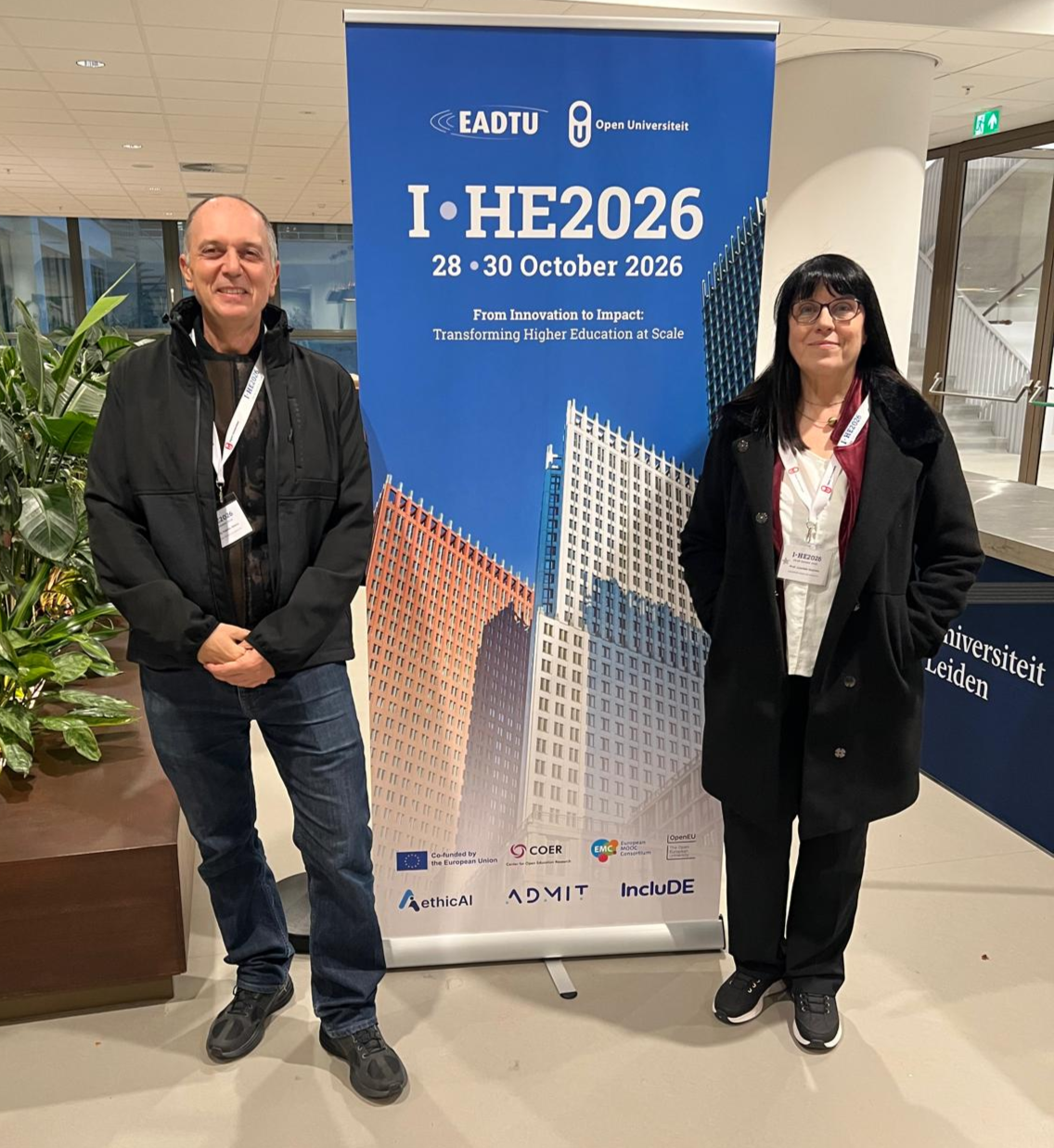
Edul@b researchers Lourdes Guàrdia and Marcelo Maina, from the Universitat Oberta de Catalunya (UOC) and affiliated with the Research Centre on the Futures of Education in the Digital Era (UOC-FuturEd) at the Faculty of Education, took part in an intensive programme of international activities held in The Hague (Netherlands) from 27 to 30 October 2026. Their involvement combined presenting research findings, chairing scientific sessions, and collaborating on European initiatives aimed at educational innovation, institutional leadership, and knowledge transfer.
The activities took place around the Innovating Higher Education 2026 (I-HE2026) conference, organized by the European Association of Distance Teaching Universities (EADTU) and hosted by the Open Universiteit. Under the theme From Innovation to Impact: Transforming Higher Education at Scale, the event brought together researchers, university leaders, and higher education professionals to reflect on how to turn innovations into sustainable, broad-scale changes.
I-HE2026: Quality Assurance in Micro-credentials and New Challenges in Artificial Intelligence
One of the contributions from the UOC was the presentation of the study “From Strategy to Impact: Assessing Quality Assurance Maturity in UOC’s Micro-credential Ecosystem”, authored by Mitchell Peters, Lourdes Guàrdia, and Marcelo Maina, and presented during the Building Micro-credential Ecosystems session.
The research addresses a growing challenge in higher education: moving from institutional strategies for developing micro-credentials to operational systems capable of ensuring their quality, recognition, and sustainability. The study analyses UOC’s experience using a European maturity framework comprising 24 quality assurance indicators across eight sub-dimensions related to governance, pedagogical design, digital credentialing, and institutional management.
The findings show a nuanced maturity profile. Key strengths include clearly defined institutional roles, formal approval procedures, and the adoption of metadata standards in digital credentials. At the same time, areas requiring further development were identified, particularly stakeholder engagement, student feedback integration, graduate tracking, external recognition, and peer review mechanisms.
The study provides an evidence-based roadmap to guide the institutional advancement of micro-credentials and contributes to the wider European discussion on quality, lifelong learning, and innovative skill recognition models.
Edul@b’s participation at I-HE2026 also included scientific chairing responsibilities. Marcelo Maina served as chair for the session “AI, Agency & Personalised Education”, dedicated to exploring the interplay between artificial intelligence, learner and educator agency, and personalized learning. Contributions covered topics such as AI-assisted learning activity design, the transformation of doctoral supervision via human-AI collaboration, academic integrity, and cross-sector dialogue to drive educational innovation.
Meanwhile, Lourdes Guàrdia chaired the session “AI Literacy”, focusing on developing the competences needed to understand, use, and critically evaluate artificial intelligence in educational contexts. Presentations examined critical AI literacy, its role in online assessment, institutional capacity-building strategies, and the leadership required to integrate these skills effectively across higher education.
Both sessions underscored the necessity of pairing AI adoption with sound pedagogical criteria, skill development, ethical reflection, and new collaborative dynamics among educators, students, and institutions.
CTL-INNOVATE: Building a Shared European Agenda for Teaching and Learning Innovation
The international agenda kicked off on 27 October with participation in a strategic pre-conference meeting organized around CTL-INNOVATE (European Consortium for Teaching and Learning Innovation), an EADTU initiative to enhance collaboration among Centres for Teaching and Learning (CTLs) across European universities.
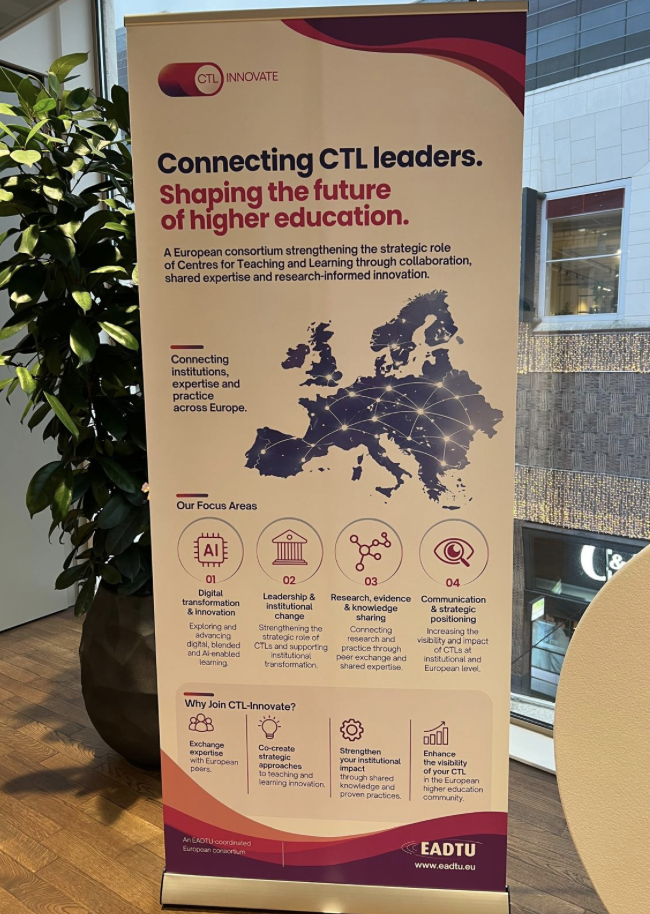
The meeting, titled Leading Teaching and Learning Innovation in European Higher Education, was organized as a participatory workshop aimed at co-creating the CTL-INNOVATE working agenda for 2027, identifying shared priorities and opportunities for institutional cooperation.
Discussions centred on four complementary themes: artificial intelligence and digital transformation; leadership and institutional change management; research and evidence generation to measure CTL impact; and their strategic positioning and visibility within universities and across Europe.
Beyond sharing practices, the goal was to build a long-term collaboration agenda with thematic working groups, shared outputs, and sustainable peer-learning mechanisms. The event highlighted the vital role of these centres as strategic agents of university transformation, bridging educational research, institutional policy, and the enhancement of teaching practices.
This approach closely reflects Edul@b’s work in learning design, evidence-informed innovation, and the development of models and tools supporting educational decision-making.
OpenEU: Living Labs Connecting University Research with Societal Challenges
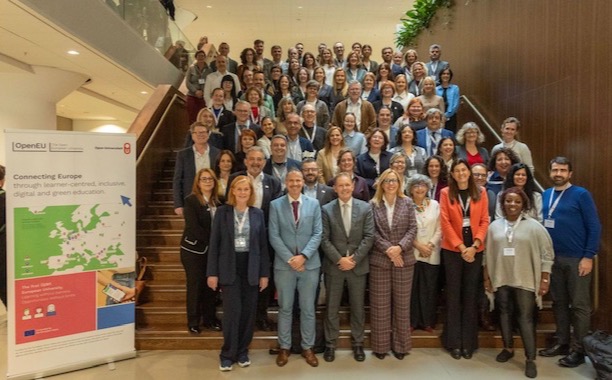
The agenda also included a working meeting on the morning of Wednesday 28 October for WP4 of OpenEU, focused on joint research and innovation in digital education. A key focal point was outlining upcoming steps to establish Living Labs as collaborative spaces between universities and societal stakeholders.
The discussion reviewed insights from earlier workshops exploring the university’s role as a key catalyst in partnering with external stakeholders toward shared initiatives aligned with the Sustainable Development Goals (SDGs). The meeting built upon outcomes and recommendations from events like the workshop hosted by the UOC in October 2025, which gathered 74 participants from the university community and external organizations. That session identified and prioritized challenges across five key areas: Quality Education (SDG 4), Industry, Innovation and Infrastructure / Digital Transformation (SDG 9), Climate Action (SDG 13), Peace, Justice and Strong Institutions / Democratic Values (SDG 16), and Partnerships for the Goals (SDG 17).
Identified priorities highlighted youth inclusion and engagement, digital and regional divides, agroecological transition, democratic participation, and new models of university-society collaboration.
WP4 partners explored pathways to transition from this initial identification of challenges into co-creation events that deliver concrete intervention proposals, initiatives, and prototypes with high societal impact.
The goal is to foster an open, participatory, socially transformative research model that connects academic knowledge with real-world community needs, delivering joint solutions for sustainable development.
ADMIT: Launch of a New Course on Integrating Generative AI in Higher Education
The Hague schedule concluded with the final face-to-face consortium meeting of the European project ADMIT – Generative AI and Large Language Models in Higher Education. The meeting finalized project deliverables and prepared for its successful culmination.

A major milestone was the official launch of the new open professional development course, designed to help faculty and university leaders integrate generative artificial intelligence into higher education based on sound pedagogical, ethical, and organizational criteria.
At the core of this course is the AI-Assisted Learning Design Framework (AI-Assisted Learning Design Framework), developed within the ADMIT project with leading contributions from the Edul@b team, coordinated on this initiative by Lourdes Guàrdia.
The framework outlines a structured integration of generative AI across three learning design stages: analysis and planning, activity design, and development and production. Each stage maps out opportunities for human-AI collaboration, the tasks AI can assist with, and the decisions that must remain under human oversight.
This approach builds on a core premise: while AI can explore alternatives, draft proposals, create resources, or review materials, learning quality ultimately depends on pedagogical discernment, contextual grounding, and critical human validation.
The course also features a Toolkit developed jointly by the ADMIT consortium, turning these principles into actionable practice through three complementary instruments: the Ethics & Compliance Check reviews institutional regulations, data protection, and ethical risks; the AI-Assisted Learning Design Protocol (AI-LD Protocol) structures task allocation, human-AI agency, and key checkpoints; and the Quality Safeguards facilitate evaluating pedagogical alignment and output quality. We would also like to acknowledge the collaboration of the eLinC, which participated in testing this framework and toolkit, along with the participation of professor Camino López from the Faculty of Psychology and Education Sciences.
These instruments have been compiled into an interactive H5P learning resource designed to support educators through the design workflow, assist protocol adoption, and document pedagogical decisions.
This training offering marks a significant step forward in transferring ADMIT’s outcomes, turning research into practical guidelines and actionable tools for educators. It emphasizes reflective, informed decision-making, professional autonomy, and responsible technological use.
From Research to Educational Transformation
Participating in these activities provided a valuable platform to share research findings, discuss ongoing initiatives, benchmark perspectives with European peers, and identify future collaborations. These exchanges continue to broaden reflections on higher education challenges and explore ways to translate research insights into everyday educational and institutional practice.