Marcelo Maina reflects at the University of Manizales on educational innovation and digital transformation in higher education
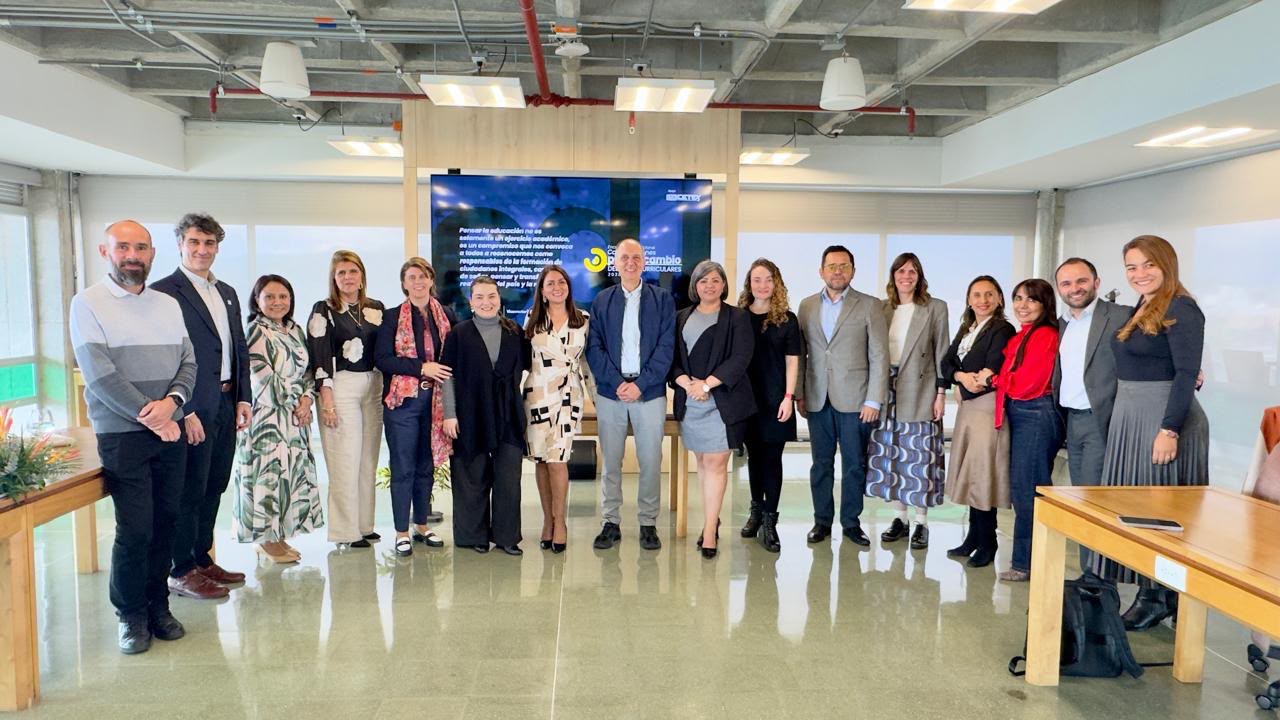
How can universities innovate without getting caught between the promises of new technologies and the need to preserve the pedagogical purpose of education? This was one of the questions that guided the two lectures given by Marcelo Fabián Maina, a researcher at Edul@b – Futures of Education in the Digital Age Research Centre (UOC-FuturEd) and professor of Psychology and Education Sciences at the Open University of Catalonia (UOC), during the International Meeting “Conversations for Change: Curricular Challenges” held on June 11 and 12 at the University of Manizales (Colombia). The event saw a large turnout from the university community of Manizales, a university city with seven higher education institutions. Academic staff and students from the University of Manizales also participated online, totaling more than 700 registered attendees, both in person and online.
Innovating with purpose: beyond technological adoption
The first conference, entitled “Innovating is not adopting technology: it is redesigning the meaning of learning”, presented a critical look at the relationship between innovation and technology in higher education.
The report highlighted that emerging technologies—such as artificial intelligence, data analytics, extended reality, and microcredit technologies—possess enormous transformative potential, but do not in themselves constitute educational innovation. Innovation occurs when institutions are able to introduce significant changes in pedagogical models, assessment, academic management, or curriculum design to improve the learning experience and generate social value.
The presentation addressed the risks of an impulsive adoption of new technologies, fueled both by corporate rhetoric promising immediate solutions and by institutional fears of falling behind in the face of technological change. Given this situation, it is imperative to reclaim educational sovereignty for universities and to align technological decisions with clearly defined pedagogical objectives.
Data that cares: analytics at the service of learning
One of the central themes of this first conference was the use of data in higher education. The focus was on how learning analytics should be geared towards supporting and caring for students.
To illustrate this idea, international experiences were shared, such as those developed by the Open University of the United Kingdom, where data analysis has made it possible to identify patterns associated with academic success and improve support strategies for students at risk of dropping out.
The work carried out at the Open University of Catalonia (UOC) was also referenced, specifically an institutional learning analytics project based on the integration of data from the virtual campus, academic records, surveys, and other educational information sources. One of the most noteworthy aspects of this initiative was the participatory development of dashboards tailored to different institutional profiles. Professors, program directors, deans, and management teams collaborated in defining indicators relevant to their roles, transforming the data into a useful tool for academic decision-making.
Artificial intelligence and educational governance
The second part of the conference focused on generative artificial intelligence and the challenges it poses for universities, based on recent research conducted at leading international institutions. The discussion no longer revolves around whether AI should be introduced into higher education, but rather how to govern it responsibly.
The main concerns identified by universities include over-reliance on automated systems, the protection of personal data, algorithmic biases, intellectual property, and the potential weakening of cognitive effort associated with learning.
Faced with these challenges, it is crucial to develop clear institutional frameworks, ongoing professional development programs for faculty and students, new assessment strategies, and policies that guarantee transparency in the use of these technologies. To illustrate this point, the work being carried out in the Erasmus+ ADMIT project was shared. This project developed an AI-assisted learning design framework, along with a series of tools that facilitate ethical and informed design and decision-making. This approach includes rethinking the student learning experience, which must be reoriented toward a new approach that incorporates AI into the development of knowledge and skills.
In this context, the concept of expanded intelligence was presented, a vision that understands artificial intelligence as a support tool capable of enhancing human capabilities without replacing critical judgment, creativity, or ethical responsibility.
Structural virtuality: rethinking the university from the learning experience
The second conference, Redefining Higher Education: Structural Virtuality, Expanded Intelligence and Emerging Learning Experiences, focused on the institutional transformation processes needed to respond to new ways of learning.
The starting point was an increasingly evident reality: learning processes no longer take place exclusively within the university campus. Through the example of a student who combines work, mobile learning, online collaborative activities, and personalized digital resources, the presentation illustrated how the university is becoming a distributed experience that accompanies the student wherever they learn.
From this perspective, the concept of structural virtuality was explored in depth, understood as a comprehensive transformation of teaching, learning, and university organization. It is not simply about digitizing processes or incorporating technological platforms, but about building institutional capacities that allow for flexible, inclusive, and sustainable educational experiences.
As an example, the experience developed within the framework of the Erasmus Capacity Building AMED project, in collaboration with the National University of Maldives, was presented. There, the geographical dispersion of the population and the institution’s commitment to national development drove a transformation process based on hybrid learning models, teacher training, institutional strengthening, and curriculum redesign. The project enabled the development of dozens of hybrid course prototypes, new institutional policies, and a roadmap aimed at consolidating hybrid learning strategies.
Next, the DIGITAsia project was presented, which builds upon the previous one, expanding both the participating countries (Maldives, Sri Lanka, and Malaysia) and the number of higher education institutions (seven). This project advances a transformation of teaching towards flexible approaches where course design utilizes design analytics and artificial intelligence.
Microcredentials and employability
Another of the conference’s highlights was the evolution of academic recognition systems and the role of microcredentials in contemporary learning pathways.
As explained, higher education must move towards models that can make visible the skills and learning developed both within and outside of formal programs. In this context, micro-credentials emerge as a strategic tool for recognizing specific achievements and strengthening the connection between universities and the world of work.
To illustrate this transformation, she delved into the experience of the European H2020 project in collaboration with sub-Saharan African countries. EPICA developed a methodology to identify, assess, and certify employability skills through guided reflection processes, evidence gathering, and teacher support. The recognized skills include teamwork, communication, problem-solving, digital skills, and other abilities highly valued in contemporary professional environments.
Beyond issuing digital micro-credentials, the project also sought to strengthen students’ awareness of their own abilities and help them build stronger professional narratives for their entry into the workforce.
The presentation on this topic of expanded models of education and recognition of achievements was complemented with other projects promoted by the UOC, such as GPS Profesional and digital portfolios, tools that promote lifelong learning and the construction of personalized educational pathways.
Technology, pedagogy and social commitment
Throughout both conferences, a cross-cutting idea emerged: the transformation of higher education cannot be understood exclusively as a technological process.
Learning analytics, artificial intelligence, structural virtuality, or microcredentials only make sense when they are integrated into educational projects that place people at the center of institutional decisions.
From this perspective, the goal is a university capable of combining innovation, pedagogical reflection, and social commitment to respond to the challenges of an increasingly complex and interconnected world.
Technology should not replace the human experience of learning, but rather expand the possibilities for building more inclusive, meaningful, and transformative educational experiences.
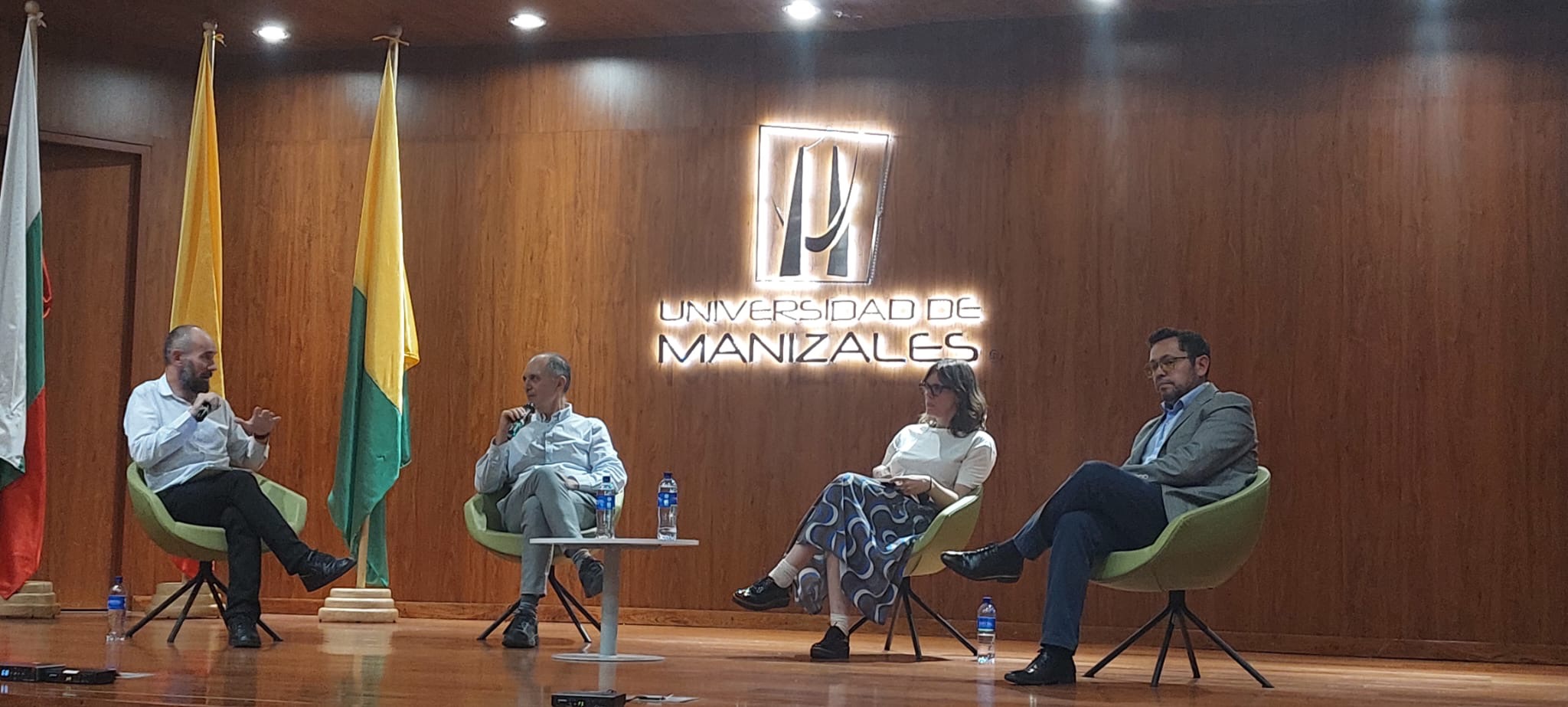
These and other topics from each of the sessions were explored in greater depth with the rest of the panelists, in expert panels organized for the sharing of ideas and to answer the participants’ questions.
Other activities
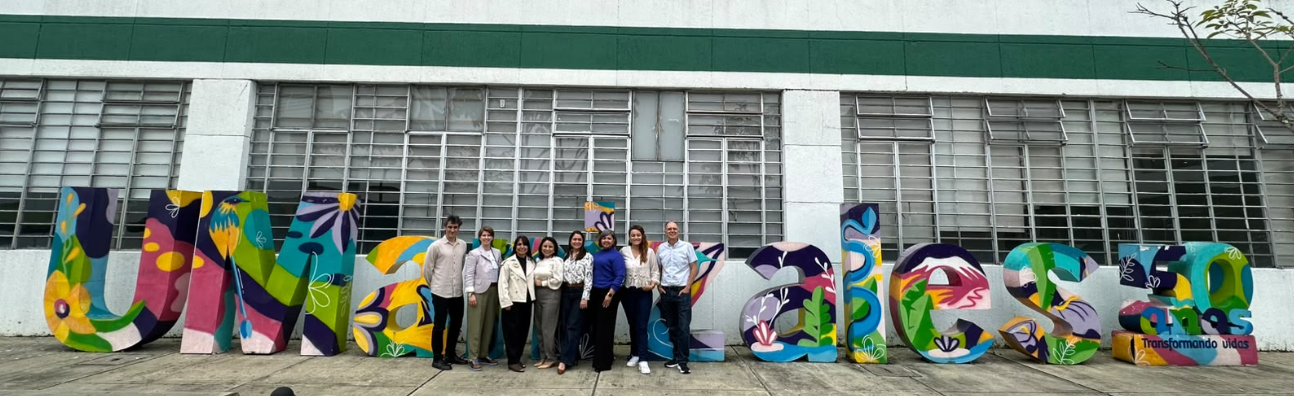
The visit to the University of Manizales included Dr. Maina’s participation, along with Dr. Mary Elizabeth Morocho (Deputy Director of the Latin American Institute for Quality in Distance Higher Education), in a working session moderated by Dr. Yamilhet Andrade Arango, Vice-Rector of the organizing institution. They discussed emerging technologies and the quality of learning experiences with faculty from various academic units of the university, within the framework of the host institution’s new strategic plan. The agenda also included participation in a podcast series documenting the event and in a broadcast on the university radio program, El Matutino de UMFM.