The University as Guarantor of the Employability Skills of its Graduates: Methodology and Experience
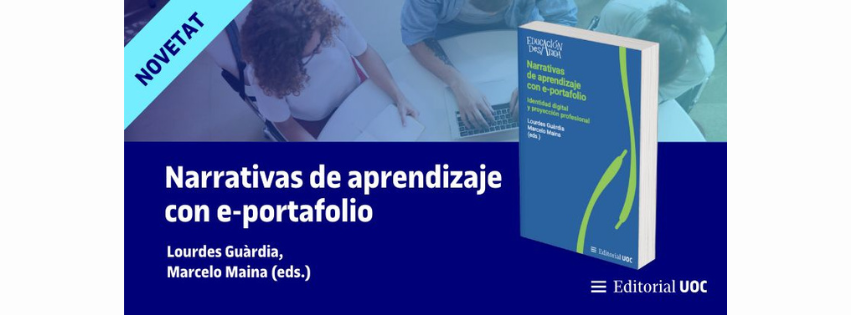
The recent publication of the chapter Microcredentials and e-portfolios for improving employability in higher education (Learning Narratives with e-portfolios: Digital Identity and Professional Projection, UOC Press, December 2025, available in Spanish) proposes a concrete way to help universities evaluate, recognize, and make visible the competencies that students develop throughout their studies, and to connect them with the needs of the professional world. This work, developed as part of the implementation of the H2020 EPICA project, encourages continued efforts to connect academia with the world of work in a sustained and collaborative manner.
Higher education, employability and curriculum innovation
Higher education can no longer be conceived solely as a space for the transmission of knowledge. It must also assume an active responsibility for the employability of its graduates, their ability to identify their strengths, and their capacity to demonstrate their skills with evidence. The debates on learning assessment, active methodologies, and the adaptation of universities to new social demands, which the UOC has brought to the table in its institutional reflections on teaching innovation, point in this direction.
The recently published chapter on ePortfolios and microcredentials addresses precisely this issue from an applied perspective. Its starting point is clear: traditional credentials do not always effectively communicate what and how students have learned, nor do they accurately reflect the transferable skills that can be crucial in a changing job market.
EPICA as a space to find solutions
EPICA was a project focused on the design and validation of a methodology for the assessment, recognition, and visibility of employability skills. The proposal was based on two central components: a competency-based electronic portfolio, conceived as a tool for transitioning between academia and the world of work, and a digital micro-credentialing system designed to make these skills visible to potential employers.
The experience was piloted in four universities: the UOC and three African universities (Maseno University, Makerere University and Open University of Tanzania).
Project results in figures
One of the project’s strengths is that it is presented not merely as a conceptual proposal, but as a piloted methodology with concrete data. 13 faculty members, 169 students, and 24 employers participated across the three African universities, in 11 degree programs covering disciplines such as education, law, management and administration, mathematics, social work, nursing, and computer science.
During the pilot program, 526 microcredentials were awarded. The most frequently developed skills were creative thinking (161; 30.6%), communication and interpersonal skills (139; 26.4%), and problem-solving (108; 20.5%). Furthermore, 136 students (80%) continued to the second phase of the program and presented their micro-credentials in their ePortfolios to potential employers.
The UOC’s own experience, developed within the Master’s in Education and ICT (eLearning), adds another relevant piece of information to understand the transfer of the project: in the pilot carried out in the program, 2 teachers, 28 students and 7 employers participated, which allowed the proposal to be tested also in a context different from the African one.
ePortfolio, assessment and microcredentials
The Employability Skills Micro-credentialing Methodology (ESMC) is structured around two interconnected articulations. In the first, students explore curricular and extracurricular experiences, reflect on them, select evidence, integrate it into a narrative, and submit it for evaluation using rubrics. Once the skill is sufficiently demonstrated, it is recognized with a micro-credential. In the second articulation, the focus shifts to the professional sphere: reviewing the profile, personalizing the ePortfolio, incorporating new evidence, recording a testimonial video based on the STAR method (Situation, Task, Action, Result), which allows for the effective structuring of their experience, and presenting the entire package to potential employers.
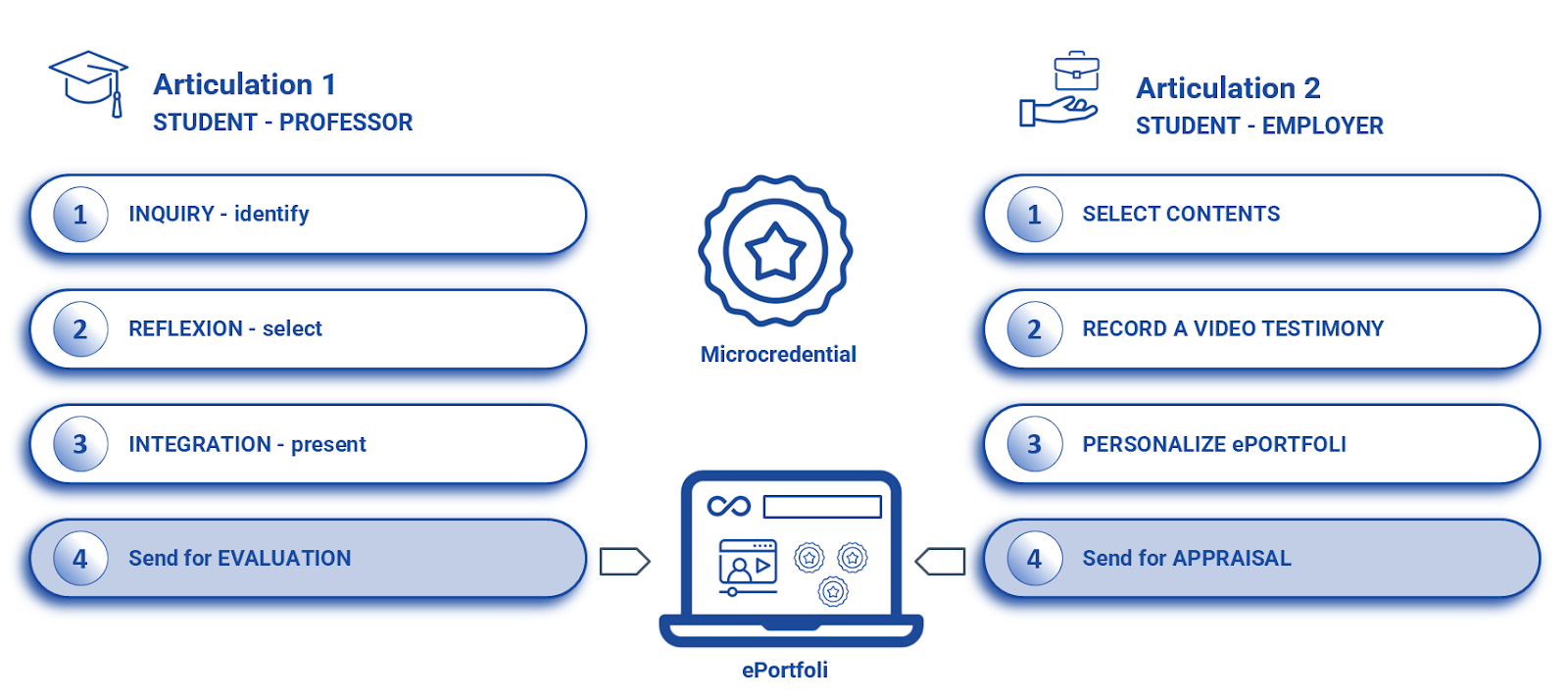
This methodological approach helps explain why the project’s results are relevant to current higher education. It doesn’t simply add digital badges to a student’s record, but rather redefines assessment as a process of inquiry, reflection, integration, and demonstration. The ePortfolio ceases to be a repository of work and becomes a tool for articulating learning and professional development. And micro-credentialing introduces a more granular, verifiable, and third-party-readable layer of recognition.
Skills, stakeholders and connection with the labor market
The experience also showed that employability cannot be addressed solely within the classroom. The project deepened the collaboration between students, faculty, and employers, and linked this collaboration to the review of teaching practices, curriculum innovation, and improvements in recruitment processes. The project’s results underscore that employer participation in the academic process increased transparency, trust, and the external value of skills recognition.
The results also point to concrete benefits. Teachers identified changes in their assessment practices and in the design of activities more focused on learning outcomes and competencies. Students gained awareness of their strengths, improved their confidence, and developed a better understanding of job market expectations. And employers valued access to contextualized evidence, video presentations, and the opportunity to learn more about what the candidate can do, beyond what a traditional CV conveys.
In this sense, the project’s results engage with debates that are very present on the university agenda: learning assessment, active methodologies, lifelong learning, skills traceability, and new forms of recognition.
European recognition of the ESMC
The project’s relevance was further reinforced by the award and inclusion of the methodology in EU Innovation Radar, the European Union platform that highlights research initiatives with innovative potential funded by EU funds. This recognition validates the methodology’s value in improving the visibility of employability skills and facilitating the connection between universities and employment.
Publications for further reading
The academic output associated with the project allows for a deeper exploration of different aspects of development: from the diagnosis of the problem to the methodological design, from piloting to validation, and from there to institutional transfer.
Guàrdia, L., Mancini, F., Jacobetty, P., & Maina, M. (2021). Graduates’ employability skills in East Africa. Journal of Teaching and Learning for Graduate Employability, 12(2), 169–184.https://doi.org/10.21153/jtlge2021vol12no2art988
This publication helps to understand the initial problem: the gap between the skills demanded by the labor market and those that higher education makes visible or develops explicitly.
Guàrdia, L., Maina, M. F., & Mancini, F. (2021). Increasing the Visibility of Graduate Students’ Employability Skills: An ePortfolio Solution Addressing the Skills Gap. En B. Padilla Rodriguez, & A. Armellini (Ed.), Cases on Active Blended Learning in Higher Education (pp. 253–275). IGI Global.https://doi.org/10.4018/978-1-7998-7856-8.ch013
Its main contribution is to present EPICA as an institutional response based on ePortfolio, technology-supported evaluation and active methodologies.
Maina, M. F., Guàrdia, L., Mancini, F., & Martinez-Melo, M. (2022). A micro-credentialing methodology for improved recognition of HE employability skills. International Journal of Educational Technology in Higher Education, 19(10).https://doi.org/10.1186/s41239-021-00315-5
It is the publication that formulates the methodology, validates it empirically, and presents the quantitative and qualitative evidence of the pilot.
Maina, M. F., Guàrdia, L., Mancini, F., & López, D. (2022). Visibilization of Graduating Student Employability Skills via ePortfolio Practices: Evidence From East African HE Institutions. En D. Piedra (Ed.), Innovations in the Design and Application of Alternative Digital Credentials (pp. 191–231). IGI Global.https://doi.org/10.4018/978-1-7998-7697-7.ch009
It develops the implementation of the pilot and shows the pedagogical and institutional conditions necessary to transfer the methodology to other contexts.
Maina, M., & Guàrdia, L. (2025). Microcredenciales y e-portafolios para la mejora de la empleabilidad en la educación superior. En L. Guàrdia y M. Maina (eds.), Narrativas de aprendizaje con e-portafolio: Identidad digital y proyección profesional (pp. 101–119). Editorial UOC. https://www.editorialuoc.com/narrativas-de-aprendizaje-con-e-portafolio_1
Re-examine the experience from the combined value of the ePortfolio and the micro-credentials for the professional development of the student body.
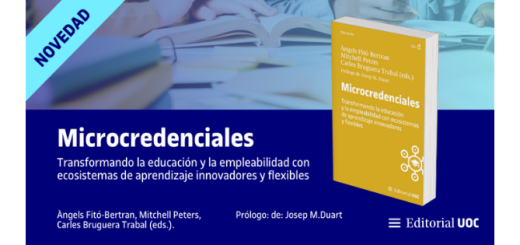
Maina, M. F., Guàrdia, L., Mancini, F., & Martinez-Melo, M. (2025). Metodología de microcredencialización para el reconocimiento de competencias de empleabilidad en educación superior. En A. M. Peters i C. Bruguera (eds.), Microcredenciales: transformando la educación y la empleabilidad con ecosistemas de aprendizaje innovadores y flexibles (pp. 167–181). Editorial UOC. https://www.editorialuoc.com/microcredenciales
It updates EPICA’s contribution and connects it to the contemporary debate on flexibility, recognition, and visibility of learning.
Guàrdia, L., Maina, M. F. … et al. Colección de documentos de EPICA: Guías de estudiantado, profesorado, y personal empleador. Handbook sobre desarrollo, evaluación y visibilización de las competencias de empleabilidad en educación superior. https://openaccess.uoc.edu/collections/7f1e86e2-a02b-4e11-b6ba-b24291d914c4
Its value lies in its transferability: it transforms experience into a set of practical resources for other institutions interested in developing similar methodologies.
A project that continues to challenge the university
EPICA remains relevant because it addresses a question that is crucial for higher education today: how to help students demonstrate, with understandable, assessable, and reliable evidence, the value of what they learn. The recently published chapter allows us to revisit this experience at a particularly opportune moment, when the conversation about employability, assessment, curriculum innovation, ePortfolios, and microcredentials is increasingly central to the university agenda.